
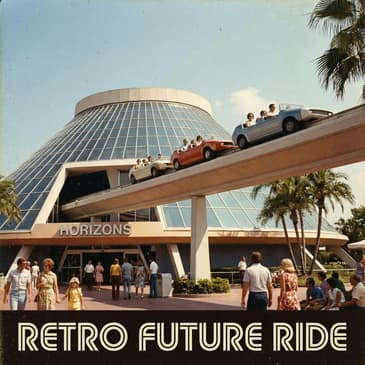
Howdy, folks! We're back and we are looking at two classic, closed attractions and trying to decide which should come back. Can you guess which?
__________________
Theme by J. R. Trimpe at Trimpe.org
Image by AI because I'm tired.
Learn more about your ad choices. Visit megaphone.fm/adchoices
[00:00:00] Kaffee in seiner besten Form mit der neuen Cubo One Kapselmaschine von Chibo. In jeder Cubo Kapsel steckt Spitzenkaffee aus besonderen Anbaugebieten. Für Espresso, Kaffeekrema oder Kaffeekrande auf Knopfdruck. Die neue Cubo One überzeugt mit Premium Design, kompakter Größe und kleinem Einstiegspreis ab 29 Euro. Dank innovativer Press Brew Technologie wird jede Tasse besonders aromatisch mitsamtiger Crema. Entdecke jetzt die Cubo Kapselmaschinen in deiner Chibo Fiale und auf Chibo.de.
[00:00:46] Welcome to the Supreme Resort Land v. World, a podcast about Disneyland and Walt Disney World and which is the Supreme Resort. Each episode we will discuss and explore each resort ride by ride, land by land, park by park, closed ride by closed ride to answer this long elusive question. Which is better, Disneyland or Walt Disney World? I'm Dan and thank you for joining me on this quest to help the greater good of humanity answer that very long elusive question.
[00:01:15] Which one is better? Joining me as always from the upcoming Supreme Resort live show, I have not updated my notes. It's Jimmy. Hi, thanks host name. It's great to officially be on the other side of the mic. I'm ready to hang out, talk about topic of the episode and see where the conversation takes us today. And from the hit podcast, Boys Planning, as well as every other podcast you listen to, including the- Oh wait, no, I need to thank you. Hold on. It's Eric.
[00:01:45] Yes, okay. I gotta validate you. Briefly thanks now. Thank you. I thank you by name, Dan. So the listeners feel the natural chemistry between us. Wow. Someone is not using ChatGPT. I'm guessing Gemini? Is that Gemini? It's Gemini. Quickly, how would I respond to being introduced as a co-host on the Supreme Resort as Jimmy? Which platform are you using? Wait, let's get Eric in here first so he can also- Okay, hold on. All right, thanks.
[00:02:17] Hello. I am also familiar with host and chemistry. I love robots. They're the best. Wait, was that? That was Gemini, right? I'm guessing? Yeah, it was. Oh, wow. That says so much about me as a person that I know the difference. Yeah. Sure does. You may get more. Yeah. Maybe that's why you got some of the results-
[00:02:46] It's possible. In your research. It's possible. Jimmy, we'll discuss a workflow using AI bots after the episode. Let's see. Dan joining me, Quest, which one's better? That's Jimmy. We got Jimmy. Okay. I want to thank you both for taking time. Yeah, we did that part. Okay, thank you. I want to thank you both for taking time out of your 250 UFC experience to be with us.
[00:03:16] On the lawn right now. On the lawn. I mean, I'm literally in the pond. You know, it's taller than the tallest building. Oh, yeah, right. And it's bluer than the bluest sky. Right. If you take the pool and you set it diagonally. That's right. I feel like he's had this conversation about several things in different settings. Anyway, yes. This episode, we're going to be talking about the people mover versus horizons.
[00:03:46] It's they're both closed. One more visibly. So than the other. The good news about this one is I either way we decide all of our listeners will understand and agree with us. It's one of those episodes.
[00:04:28] That's right. The large version of the family. No, just the four of us. The expanded universe of the family. The nuclear. We're going to see the mother in law, but she is living with her boyfriend and her house is being rented out. So we needed accommodations. We used our DVC points. And what's his name? And where does he live? We'll not say. Okay, I'm going to trick you one of these days. I have been to Disneyland.
[00:04:54] I just got back a couple of days ago and I usually don't like to do a trip report for everything, but oh my God. Did you know that park hopping is now free? Not free is a cost. Like you can go at any time. You just go, you don't have to like check into your park first or you just. You don't. Yeah. You don't even have to go to the park that you reserved. Why do you have to make a reservation? You can go to any park you want. Because they don't want to get rid of them. And.
[00:05:24] So you could have a reservation for Disneyland and just show up at eight o'clock and go to DCA. Nobody says a word. You could even show up at 815. I could show up at 745, but you can't. What? You can't show up at 729 because guess what they'll do. Say, wait a minute. Yeah. Hold on. Okay. Look at them watch it. Just another one. Just another one. Okay, now. Okay. That's really interesting. I did not know that, Dan. Thank you for sharing. Tomorrow is standing outside going.
[00:05:52] Uh, go. One of the. Two of the. Two of the. So hands on. One. Um, yeah, no, it was very. You. I don't. I know I have experienced that version of the parks before, but it was like so long ago. And. It's, it's amazing. I, I. Okay. Pirates was closed, but whatever. Um, I know. I know. I dealt with it. Thematically. It was basically like, I wasn't there to be honest. Okay.
[00:06:22] Um, so I hit some of the, the rub drop things that I usually hit early and then before nine o'clock went over to DCA single rider, uh, radiator Springs, right? Like 30. It was like a, maybe a five minute wait, uh, single rider, uh, the credit coaster and Soarin all within like a half an hour. It's nuts. How many times did you ride jumping jellyfish?
[00:06:52] Uh, that was the rest of my day. Oh, okay. That tracks. Yeah. And they cheered for me as I did. So they're like, this is number two. He made it. He made it to 27. Yeah. And every time they had to assure me that it was, that it was safe and that I wasn't going to cry or be too scared. Um, also they changed the millennium Falcon. You've heard of that, right? The rise of the millennium. Yes. I've heard of the ship from the movie. I've heard of it. Okay.
[00:07:21] Does Hondo have a different pre-show? Uh, yeah, I didn't see the actual pre-show because I did single rider. Cause I'm cool. Um, but I would imagine, I think the, the premise is now that they are, I think I saw a video where it was the premise is that instead of like borrowing the Falcon, he's kind of stealing it. I like that. Which is more fun. Yeah.
[00:07:50] Um, jellyfish are involved in the, in the stealing. Well, the entire ship is made out of jellyfish now. Oh, okay. Which is amazing. That's a change. Very drippy. Um, yeah. No, it's a, it's, it's actually legit, legitimately cool. There are three places you can go that I know of. Everyone seems like everyone has stuff to do. Um, yeah, I've heard that. Look at the YouTubes. Yeah.
[00:08:17] Did, uh, did, um, is coaxium involved at all? Uh, not coaxium, but like bounty, not the paper towels. Like they you're stealing. It's not about the quicker, thicker, picker upper. No, sorry. Although what a sponsorship opportunity. Um, the quilted quicker, you're apparently stealing things. And I think taking hostages. I think it'd be great. But they're bad guys. If you did just pick up a pallet of paper towels. That'd be awesome.
[00:08:47] We found the bounty. It's the best product place. And the Mandalorian is there and we're bringing the whole thing. So, so it's very exciting. You get to hear him go, okay, now do that thing. Good job. Um, was it Pedro Pascal? Uh, may it could be anybody, but I think it is. Was it Jim Hanks? He's the, yeah. It's, it's Timmy Pascal. It's. He gets a job.
[00:09:17] Also, they have little droids that jump around and, and are delightful over there. Again, see the YouTubes. Mention us in the comments because this is going somewhere. Uh, magic guy theaters currently open again with Pixar shorts. I didn't get to see that because I, okay. I didn't want to walk over there, you know? Um, but I will eventually. I hear it's good.
[00:09:42] And it's just, it's just short pants that are just like, have like, Pixar logo in front of you the whole time with the Pixar ball on it. Yeah. Luxo. Oh, makes sense. Yeah. And Jim Hanks is there going like, Hey, uh, you don't recognize me, but my voice sounds familiar. Here's my nephew chat. And then he does a really weird Caribbean accent the whole time. Uh, this is all to get to.
[00:10:11] I also wrote on Roger rabbit cartoon spin. Um, we did not know whatever the hell it was. Yes. I wrote on it to take a victory lap. Um, it was closed when we recorded our last episode. That's right. Uh, and we didn't know that what they were, one of the things that they were doing besides sandblasting the sexiness stuff with Jessica rabbit. They added a few more layers to her clothing.
[00:10:40] Now we're a scarf. She's, she's now dressed up as the Phillies fanatic. But it's her under there. Uh, rare sports, sports reference from me. Um, they took out the, um, it's, it, it spins, but you try to grab that wheel and it doesn't. It doesn't do anything.
[00:11:07] Um, is it still called cartoon spin? Yes, because it is still a car in a cartoon and it does still spin. Um, you just don't. Well, you don't spin it. And what I thought initially was that, okay, it's just going along the track and it's kind of just spinning the way the track makes it spin naturally. Mm hmm.
[00:11:32] And then I got to a point where it very clearly grips the thing and took control of it. And that's worse because it doesn't make any sense. It's, it's unpleasant. Um, it's, it's, it's, it's too, it's too much. And I, I think that the interface, the way you need is that interface of being able to control it in order to have it not feel like a chaotic fuster clock.
[00:12:02] And instead it just is. And I think that the thinking was like, it's wacky cartoon stuff. Um, so. Um. So it sounds like it's been, the verdict's been overruled. As a fake theme park lawyer, I would have to not take this case.
[00:12:26] Well, the case has already been presented and it was determined, it was ruled that the cartoon spin was supreme over cosmic rewind. And it sounds like that ruling has been overturned. A lot of people were not happy about that. And then this news came out. Yeah, I mean, okay, if I'm being completely objective about this, I think it won based on two things. The first is that you control the spinning.
[00:12:57] And the second is that it fits more in the land. And I think the second still stands up to be fair. That's fair. Yeah. But the first, it is to town. Right. But the first part doesn't fit anymore. Or doesn't, it's not true anymore. So I guess the question is, does it still win?
[00:13:18] I, I, I wouldn't, if it had never, if you had never had control over the spinning of it, I don't know that I would make the case that it's better. But I also don't know if I would make the case that it's worse. Okay. Perhaps it's still an appellate court decision. Hmm. Maybe that is, maybe this is all just a complicated way to mention that we're doing appellate court at some point. At some point. Maybe. We'll get there. I think we have complicated ways to mention things.
[00:13:47] Um, we were supposed to have our live show at Shakey's in Anaheim, uh, a month from when we're recording this roughly ish. Um, so we still haven't heard back from them. No. Right. So I assume that that is not happening and Eric can't be there.
[00:14:07] However, um, if you would like to still go to Shakey's in Anaheim on July 6th, 16th, 17th, 18th, whichever you decide, uh, feel free to go and ask them where the live show is. Um, please be nice. Be polite. Buy something. Mojo potatoes for sure. Mojo potatoes, the chicken's delicious.
[00:14:30] Um, and, uh, face spaghetti is like, and I think, uh, Jason's talking about doing a live show with everybody. Yeah. Yeah. That came up with all the pods. Yeah. Pods. Anyway, uh, let's get to it. We got some meat. Main event. Uh, speaking of, uh, main events, to have to you. I'm sleeping. Um, right. Here we go.
[00:14:57] Uh, we are discussing the people move reverses horizons and we're going to try to figure out which one. I believe the premise is which one, if we could grant one, the wish to come back and be a real boy, which one would deserve it the most? Is that correct? That's right. Yeah. Okay. And it may be a monkey's paw situation where it actually makes things worse and that would be whimsical, but that's not what this show is about. Uh, definitely.
[00:15:27] Middle finger just went down. Ooh. Oh, I've got it here in the office. Yeah. Yeah. Yeah. In the. The monkey's paw is how we got this. In the supreme resort office. Uh, oh, monkey's paw. Thank you so much. Uh, arguing for the people mover is Jimmy. Hi. That's, that's him. And arguing for horizons is Eric.
[00:15:56] You've heard of me before. That's him. And I'm Dan still. Or her. And this is the part of the show that. And this is the part of the show where we all realize that I should not be hosting these things. Uh, sounds Dan, if you like. Oh yeah. We have sounds. Thank you so much. Um, we have sounds. Uh, podcasts are an audio medium. Have you heard of podcasts? If Jimmy says something that I think is delightful about the people mover or makes me cry a little bit that it's gone.
[00:16:26] Uh, you're going to hear this sound. Prepare for the game grid of troll. That's right. Um, and if classic Eric. If Eric says something about horizons that I find delightful or, uh, sad or any emotion, you're going to hear this sound. You know, people have painted some pretty fantastic views of the future and some pretty mixed up ones too. There we go.
[00:16:55] Uh, that is not from carousel of progress. I'm guessing that is from horizons. Horizons. Correct. Okay. Okay. Successor of carousel of progress. Yeah, that's right. Um, so just to level set here, I have been on people mover several times. I'm still sad that it's gone. Um, never see after hours to see, they hear the detailed breakdown from Dan's memory about what happens. Uh, may not be the same as mine.
[00:17:24] Um, horizons. I have never been on. However, it is, I think, I think it's safe to say that it's sort of the white whale. Uh, I think both are the, like the white whales of, uh, Disney theme parks where it's like, I wish we all wish that it would come back or we all wish that we had been on it. Um, is that a correct? Yep. Assumption. I think that's, that's, that's, that's appropriate. Yeah.
[00:17:52] When I was at Disney world for the first time in 1995, I got to look at the book, the building every day and wonder if it was going to open and it never did. The giant building. The huge, so big building. Um, so I decided that I'm going to judge on this one because I, if given a choice, I would not be able to tell you right now. And that's why we're having this conversation. That's what this podcast is.
[00:18:22] Welcome to the show. A, we're going to start with opening statements. Jimmy. Yes. Open our statements. Okay. This is the tale of two tomorrows. Hmm. May it please the court of Disney fandom. We are here to debate the resurrection of two fallen giants, the Disneyland Wedway people mover and Epcot's horizons. Both represent the peak of Disney's mid century, mid century optimism.
[00:18:49] However, only one deserves a physical rebirth in the parks today. Horizons was a masterpiece of storytelling. It was ultimately a passive closed box, dark ride. Its vision of the future was fixed in a specific era. The Wedway people mover is not just a ride. It is an active kinetic ecosystem. It serves as a moving architectural element, a crowd management tool, and a living thesis statement for Tomorrowland. Full stop.
[00:19:20] Horizons lives perfectly as a digital archive and a core memory. The people mover belongs on the tracks. Disneyland desperately needs its kinetic heart back while Epcot has already evolved past the specific futurism of horizons. Wow. We're already doing closing statements at the same time. No, that was my opening. Okay. It was the opening.
[00:19:44] So for people listening to the podcast who hear the word futurism and think, uh oh, we're not talking about that kind. We're talking about the forward thinking. We've talked about this before in the podcast. Futurism, the art movement is a different thing. Eric, open your statement, please. I will open the statement and here is the statement that I have found in this envelope right here.
[00:20:13] Here we go. I don't know if this was a cool building or an ugly building. It was enormous. We have other enormous buildings at Epcot now. But Horizons defined Epcot as much as spaceship Earth. The attraction was defined by its motto. If we can dream it, we can do it. By the way, this was not a Walt Disney quote.
[00:20:39] This came from Sherilyn Silverstein who worked at General Electric at the time of the ride's opening. Please listen to retro WDW slash the Lake Buena Vista Society for the full story. Um, I will put, I will try to find the specific episode and put it in the notes. But Horizons was one of the best attractions ever completed.
[00:21:06] Because it completely encapsulated the park as it was located in while also creating a sequel to a show that Walt Disney also created. Also, there were plenty of neon lights and plenty of animatronics, plenty of robots in there. And it had three endings that you could select during the ride. It.
[00:21:39] Yeah, there we go. Dan is me. We lost Dan. Should we give three endings to this episode so that we. Like clue. Ooh. Yeah. So the listening. Here's how it really happened. So maybe we can do that. And if you want to hear. If you want to hear. If you want to hear corporate. Press one.
[00:22:10] Okay. That was, those were our opening statements. As everyone knows, opening statements are not privy to points, but. They're not admissible. The Supreme Court is still, still taking up that case. So. What was next? We have history. History. Yeah. History. Okay. Let's, let's hit, let's hit, hit us with some history. All right. If I may. If I may. It just all started with one little spark. A mouse.
[00:22:40] Of imagination. At the 1964, 1965 New York World's Fair heard of it. The technology behind the people mover began as the Ford magic skyway at the 1964, 65 World's Fair. While Disney wanted to move guests through exhibits continuously without stopping. Disney built a system using real Ford vehicles propelled by motorized wheels embedded directly into a stationary track. The evolution.
[00:23:09] The Disneyland people mover from 67 to 95. Opening during the new 1965 New Tomorrowland 1967, excuse me. This version used Goodyear tires embedded into the track every nine feet to propel the trains. The cars themselves had no motors. And then the Wedway people mover slash Tomorrowland Transit Authority at the Magic Kingdom from 1975 to present.
[00:23:34] This version upgraded the technology using linear induction motors or LIMs. That's magnets in the track that react with metal plates on the bottom of the cars, creating a completely frictionless, highly reliable pull. And then there is the Houston George Bush Intercontinental Airport, Wedway from 1981 to present day. Is it called the Wedway? Is it called a Wedway? Well, it is licensed as such.
[00:24:04] I don't know if they call it that. But Disney licensed this exact technology at the Houston Intercontinental Airport. It remains the only non-theme park version ever built by Disney operating as a subterranean people mover. Hmm. Now, we are going to explore the detailed ride experience at Disneyland. But if you want to know what the people mover was actually engineered for, you have to look at Walt Disney's original 1966 concept film for Epcot, the experimental prototype community of tomorrow.
[00:24:32] Because at Disneyland, it was a fun ride to rest your feet. But in Walt's actual utopian society, the Wedway people mover wasn't an attraction at all. It was the primary daily mass transit system designed to eliminate cars from everyday urban life. Here's how it would work. First of all, Epcot was a radial city. And in the radial city integration, it was designed as a massive wheel radiating out from central urban core.
[00:24:59] However, the transit infrastructure, for those of you who don't know what Epcot was originally meant to be, functioned on a strictly separated, multi-tiered radial layout. So, number one, the monorail versus the people mover. The transportation across the Florida property was split into two distinct modes. There was the high-speed monorail. That handled long-distance linear travel. It moved people from the airport to the industrial park and the theme park directly into the spine of the central city of Epcot.
[00:25:27] The Wedway people mover handled local radial transit. It was a nonstop continuous loop system designed to ferry residents strictly between the metropolitan center and the outer rings of the city. So, the three-level urban center was like this. It was in the 50-acre climate-controlled central city hub. Traffic was completely separated by function across three distinct vertical layers. The top layer was pedestrian and transit.
[00:25:55] So, completely free of combustion engines, this open-air park-like level belonged entirely to pedestrians. The monorail station and the elevated people mover tracks weaving directly through skyscrapers, hotels, and retail sections. And then the middle level, that's where the automobiles were. This was reserved strictly for personal cars and through traffic. If a resident needed to commute, they drove under the pedestrian plaza safely away from foot traffic. And then the lower level, that was service and trucks.
[00:26:25] That was a subterranean highway exclusively for supply trucks, maintenance crews, and delivery services, completely hiding logistics of the city from sight. That's where the poop trucks would go there. That's right. Poop trucks, et cetera. So, basically, then they got to Florida and realized the water table was like seven feet down and it was not realistic. See, Magic Kingdom being on the second story. And the poop trucks were sinking into the swamp. That's right. Yeah.
[00:26:55] Okay. So, imagine walking up into your suburban single-family Epcot home in the outer ring of the city. You don't walk out to a garage to start your car. Cars were meant strictly for weekend pleasure trips outside the city limits. For your daily nine-to-five job in the city center, your commute was entirely powered by the people mover. There was the local station. Every neighborhood sector had its own dedicated elevated people mover station with an easily walking distance from all homes.
[00:27:22] Residents walked up a ramp to a continuously rotating platform. It's identical to the theme park loading zones and stepping directly into a moving car. Then there's the commute inward. The trains glided at a steady pace through the green belt, passing parks, schools, and churches. As the tracks traveled further inward, the urban density increased, passing high-density apartment complexes before entering the enclosed glass dome of the metropolitan center.
[00:27:50] And then, finally, the continuous flow efficiency. Because the motors were embedded directly inside the track beams, relying on stationary propulsion instead of heavy engines on the cars, the trains could run continuously 24-7 without delays, schedules, or traffic jams. It could theoretically move tens of thousands of residents an hour cleanly, silently, and effortlessly. Now, it's a tragedy that Walt Disney never got to build it. But it proves my ultimate thesis. Well, it's a tragedy, Dan.
[00:28:22] Yeah. I, this doesn't say anything about the ride itself, but. No, we're not there yet. I think, I think that it's a fun thought experiment for any Disney parks fan to consider what Epcot actually would have been like if he had been able to build it. Um, so I find it terrifying. Utopia. Utopia. But.
[00:28:47] The utopia of renting a place for a couple of years and then being kicked out because. And being constantly on display where you can invite people through your home to see the technology of the day. And now we're going through the Nelson's living room. He's a real piece of crap. Why I oughta. All right. So, but this is, this proves my ultimate thesis is that. Right. It doesn't take anything away from the people mover itself. That's right.
[00:29:16] It's not just a nostalgic amusement ride. It was intended to be the literal lifeblood of a living, breathing metropolis. And then there's the rocket rods. Disneyland closed the people mover in 1995. It was in August of 95 to make way for the new tomorrow land of 1998. Management wanted a high thrill attraction to replace the slow moving transit ride. The results. Mm hmm. Was the rocket rods from 1998 to 2001.
[00:29:44] Rocket rods use the exact same unenforced track. Built for the lightweight, constant speed people mover. The rocket rod vehicles were heavy, rapid acceleration speedsters. The constant sudden braking and accelerating put immense structural stress on the concrete beams. The ride suffered constant breakdowns, long lines and structural fracturing.
[00:30:07] It closed permanently after only three years, leaving the tracks vacant and structurally compromised for traditional heavy vehicles ever since. The end. Yeah. Yeah. That's the brief history of the piece and persons movers. Of course.
[00:30:26] If you are a listener, if you're ever in a position where you're in charge of a major project and, you know, someone who specializes in physics and like structural design and everything says to you, you know what you're proposing is going to break the structure of the thing. You should probably listen to them. Yeah.
[00:30:51] Um, so, um, just for my own clarification, it sounds like the idea was monorail would be for like longer. Yeah. Like for longer commutes is kind of like a direct route into the city center. Right. So like from neighborhood to neighborhood or from neighborhood to neighborhood was people mover,
[00:31:14] or creepy pod to creepy pod, like say like if the vision I, that I'm thinking is like, okay, this was a part of this. This was intended to be something that you visit from a theme park. Yeah. So you take the monorail to the theme park and longer distances. Presumably if more Epcot's were built around the world, which is again, a terrifying idea. Um, you would presumably take a monorail from this Epcot to that. That's right.
[00:31:41] And then while you're in that Epcot, then you take the people movers around. Yeah. Local commute. Okay. Um, I mean, there's, it's a fascinating thing and listener, if you're not already aware of it, um, seek it out. It's, it's, it's fun. Um, I want to give a point to the people mover. That's what I'm talking about. Hold on. A history.
[00:32:11] They have one. Okay. Okay. So this people mover is unique in that it has the wheel design, the wheels, the wheels on the track go round and round. Um, that's right. Which I believe was inspired by, uh, the assembly line that Walt Disney saw at the Ford Ford factory. Correct. Yep. And he saw that and he thought, Hey, that could be a ride. And then, Hey, that could also be a mode of transportation.
[00:32:40] That as, and I think that the reason I'm veering towards that over the currently existing limb, uh, people mover is that I, I'm almost certain the limb is the more expensive and complicated way to go. Where if we're looking at, let me restart this thought. If we're looking at a proof of concept for something that could be applied across the
[00:33:09] board as like a thing cities could do this version of the people mover is, I think the more feasible one. And as a proof of concept, it should still exist. So that's a point for people mover. Prepare for the game grid of troll. Um, yeah.
[00:33:33] It, whether that is something cities would do or what would come of it, those are all debates that are separate from this that can be had, but Eric, go ahead and hit me with your history. Okay. The horizons, right? All right. Not your personal history. Although if you want to sprinkle bits of that into this history, you are welcome to. I am. I allowed to, am I allowed to tinkle?
[00:34:02] Oh, you said sprinkle. Oh, not tinkle. Okay. Usually different things. The, those are different things. Yes. Yes. Uh, among Disney fans, few extinct attractions inspire as much affection as horizons. This wasn't simply a ride. It was arguably arguably the purest expression of what Epcot center was originally meant to be
[00:34:29] an optimistic vision of humanity's future powered by science, imagination, and cooperation. Like I said earlier, it's, it's very much like, uh, the spaceship earth, but it goes further into the future. Um, but this attraction was not available on opening day of Epcot.
[00:34:57] Um, one of, this is one of the, the major attractions that was not available on, on opening day in 1982, but it did open one year later. Uh, it, this, uh, the, the, the, the attraction, all of the concept art, I've got this amazing book, uh, Walt Disney's Epcot center.
[00:35:26] That's a giant book that, uh, came out before the park opened and it has all of the concept art for, for these attractions. And let me see the book. Let me see the book. Let me, Oh, you, you want to see the book? I just want to see, want to verify that it's giant. Okay. There we go. Okay. Listeners can see the book too. That is in fact a very, it's a rather large book.
[00:35:54] It's a one night. Oh yeah. That's big. That's a, yeah. Yeah. How many pages is this book? Let me, let me see. I've never actually. And you read that? What's that? And you read that? That's a lot of pages. Yes. I read a book. Wow. That is a 250 pages. That's, that's so many pages. To be fair. It's mostly pictures.
[00:36:19] It is mostly pictures of concept art of futuristic looking crap. And this is when it came to horizons because the attraction wasn't done yet. It's all concept art and it has a lot of like, check this out. Like it's, it's like spaceship crap. That is indeed spaceship crap.
[00:36:47] That's that was the original name of the ball. Oh, spaceship crap. Crap. Crap. Crap. And then it turned into cosmic turd. And then it became the golf ball. That is the entire park. Right. You know, it's it horizons wasn't done yet. So they didn't have a whole lot other than all of these random things.
[00:37:17] And some of the pictures are actually what was what, what eventually became depicted in the attraction. But largely it was spaceship crap. Objective object objection, your honor. Yeah. I'm boring audio medium. Stop talking about pictures. We can't see. Okay, fine. Early.
[00:37:47] I'll allow it, but watch yourself counselor. Okay. Okay. So this is one of the attractions that was not done when the park opened early versions of this project carried names such as century three. Yeah. And later future probe. Ooh. Yeah.
[00:38:16] You didn't think I'd say the word probe in this episode, huh? It eventually evolved. It later became a cola future. Colon future. Cola future. It's. Oh, well, eventually. It became horizons.
[00:38:41] It was supported by general electric, which I mentioned before, which had already, it had already sponsored the carousel of progress in Disneyland and magic kingdom. So. Okay. So sponsor versus sponsor. We got GE and what, and a Goodyear was the other one. It was no GE and GE. You're talking about Goodyear people mover. The good year. Yeah. Oh, I see.
[00:39:10] Right. Okay. Just so, just so that's on the table. Okay. So if we're, if we're entertaining the idea of we're resurrecting it, which both companies, neither company. I mean, both companies are probably, let's face them, probably evil, but neither is like an Enron kind of like death culty sort of corporation. So we're, we're, we're clear there. Okay, good. Okay. Go ahead.
[00:39:40] All right. All right. Well, construction began in 1981. It was not ready for the opening. When, when the park opened. Uh, but it did open on October 1st, 1983, precisely one year after the park opened. So it's the first anniversary. They loved it. They loved it. They loved it.
[00:40:07] They loved it. The, uh, the road ride system was suspended.
[00:40:34] It was not a, a, a, you know, floor ride through. It's more like Peter Pan where it was hanging and, uh, you could put three to four riders per vehicle.
[00:40:50] Uh, and let's see, there were 175 inverted Omni mover vehicles, which could accommodate, um, uh, 525. Objection. It sounds like he's talking about the ride itself, not the history. Oh, that's fair. Uh, okay. So we got to Omni mover. Do we have how we got there?
[00:41:19] How we got there after. Like why Omni mover, as opposed to like, why suspended? Why Omni mover? Why moving sideways? I'm not trying to be combative. I'm just seeing if there's there. All right. Well, I will stop talking about the, the ride itself. Um, so also had its origins at the world's fair. Yes. At the world's fair. Well, in a way, if you think about the carousel of progress being,
[00:41:48] general electric's kind of story of progress, and then this is sort of a spiritual successor to that same family future, et cetera. Is it, is it actually the same family? It's not actually the same family, but it has always been kind of like maybe. Jimmy, are you, are you willing to concede that it is the same family? I will concede that it is not. That it is not. Okay. Okay.
[00:42:16] Um, I guess where I'm trying to dig here is this, the sequel to an already existing attraction thing. It's, it's, it's intentional. Not, I don't think it was intentional. I think it's just something that people have put together in, in, in time. I'm, I, what was that? I was talking over you. Sorry. I don't, I don't think it was intentional. I think people put this together over time. This was just. Oh, okay.
[00:42:45] It's like post hoc lore. Yeah. Like it, everything in Epcot was back in the day, there was a thing. And then, uh, we progressed forward. Like it's the same thing as, you know, spaceship earth. And it's the same thing. It, I mean, they did this three times in, in Epcot.
[00:43:12] Uh, more, more than three, three times because it, I, yeah. The seas, um, wheels, like it, like they just kept on doing the same thing. Like the future is, is near and here's what the future looks like. Do we think that's why do we know why it closed? We, I'm sorry. I'm not intending to grill you here.
[00:43:41] I just, I've never been on it and I'm, I've always, I've always been fascinated by it. So if I ever get to a place where you're like, I don't, I'm not trying to like find the limits of your knowledge. This isn't, it's not that kind of an episode where it's just like, no, no, no. You can't prove this. You can't prove a negative. So you're wrong. You know? Um, right. I'm just genuinely trying to get like, do we, was there a reason it closed or is it just, okay.
[00:44:09] We don't, didn't pay the electric bill or no, it closed because we'll, we'll. Okay. So here's, let's see what year was that. If I'm interrupting your flow at all, tell me to stop and just do what you're going to do. No, no, no, no, no. It's, it's, it's cool. I'm, I'm fine. I'm fine. Flowing with your flow.
[00:44:30] Uh, the sponsorship ended in, uh, 1993 general electrics 10 year sponsorship agreement expired. GE chose not to renew it without a corporate sponsor. Horizons became significantly more expensive for Disney to maintain on September. Okay. So here's because we're doing the episode that we're doing.
[00:44:54] This opens up an interesting thing, which is, which has the most unjust ending. Okay. Because on one hand it's, we no longer have a corporate sponsor. So F it, let's just close the place. And then on the other hand, it's, we're going to ruin tomorrow.
[00:45:23] So I'm just putting, I'm putting that out on, on the table for either, for both or either of you to play with if you want to. Well, let's, let's keep going with, with my statement here. Uh, September 30th, 1993 that officially ended. Um, this was, this was happening a lot across Epcot because the park was supposed to be built on sponsorships.
[00:45:52] But all of the sponsorships were 10 years long. And this was the time period where Disney was again, correct me if I'm wrong, but in my memory, this is the time period that Disney was like kind of making enemies left and right. Well, yeah. And, and they were moving away. They didn't want to do educational optimistic exhibits. Ah, okay. They wanted to go toward thrills.
[00:46:21] So future world was changing. And were they asking the corporations to make those changes or just to fund them? Oh, they wanted, they wanted, they for sure wanted them to renew their sponsorships and make them more thrilling. But nobody was, I mean, this is like when imagination. Uh, Kodak was like, people don't take pictures anymore. And they're like, well, we want more money.
[00:46:51] And they said, we don't have more money. I guess the heart of my question is, and I've never really thought to ask this. And again, if you don't have an answer, that's totally fine. We can look into it. But was the ask at that time. And I can see this being the case because of the leadership at the time. Disney going to these corporations and saying, hey, the ride we built for your product is boring. We need you to figure out how to make it more exciting for us. That's, that's basically what they were asking.
[00:47:21] Yes. That's ridiculous. Okay. Yeah. Hey, we need to renew the whole thing. We've got a ton of robots in this ride. We want to make this more interesting. And it's time to renew. And the corporations were all saying no. Right. Okay. So the first closure for this attraction was December 25th, 1994.
[00:47:49] It closed. There was no real description of, of why it was closed. It's probably because of loss of sponsorship. That's probably because of high maintenance costs. Uh, there were some, there are rumors of structural concerns. There's always been a rumor about like the sinkhole underneath where horizons was.
[00:48:18] But that's weird. Cause it's such a giant building and it lasted for more than 10 years. Uh, but then it was reopened in 1995. I feel like sinkhole might've been a very convenient sort of thing for them to say where it's like, Hey, we know we're closing this thing that you love. Yeah. It's actually built on top of a gateway to hell. Yeah. That, that, that was like a fan site thing. Right.
[00:48:48] Is. Oh yeah. Uh, yeah. There's a sinkhole there. So we had to close it. Um, so down the matter hole. All the sink. Right. Sorry. Um, but then in 1995 universe of energy and world of motion were being refurbished. So they reopened the attraction. Mm. And that entire, that means that an entire like quadrant of Epcot would have been closed.
[00:49:20] So suddenly, suddenly the, the sinkhole, uh, ride reopened. It became safe again. Yes. Uh, it reopened on December 24th, 1995. Merry Christmas. Uh, they thought, Oh wow. It had been, it, they, they refurbished it. They did nothing to it. That means it reopened like months after I visited.
[00:49:49] That's off. I'm sorry. I'm sorry. You missed out. Uh, but then yes, it was open between 1995 and 1999. It, it stayed open for a few more years. Uh, like I said, everybody was looking for more thrilling attractions and an Omni mover. We'll get into the actual ride in a bit.
[00:50:17] Uh, wasn't, wasn't exciting. Universal studios was open now. MGM was open now. They had much more thrilling stuff around the area and, um, they thought maybe we could re theme it.
[00:50:38] Uh, and, uh, and then they closed it and opened the super thrilling and deadly attraction mission space, which we've spoken about. So we have, that's a complicated history. Carousel of progress. We should, I think another podcast has. Yeah, I thought so. Oh, that's right. Yes. That other podcast that we let on our network.
[00:51:05] A little, um, a little blurb that I found on the interwebs. It was proposed that horizons would be the sequel to the carousel of progress located in Tomorrowland. Disney's ride from the general electric pavilion, 1964. As the carousel of progress followed the changes in lifestyle that faced a family as they lived through the 20th century, horizons continued their story showing how they might live in the 21st century.
[00:51:31] The carousel's theme song, there's a great big beautiful tomorrow was a part of the looking back at tomorrow portion of horizons. The version of there's a great big beautiful tomorrow that could be heard in the horizons coming from a television sung by Larry Seder in the art deco scenes is the exact version that can still be heard on a radio during the first act of the carousel of progress. Well, thanks for stealing some of my facts, but okay. Well, I said, is it a successor? You said no.
[00:51:59] And then I just said, you're like, thanks for stealing it. It's not, it's not. Yeah, it's, it's kind of debated, but, but yeah. Stop fighting away this point that I want to give you. No, it's okay. It's okay. All right. So because. This is from my giant book. Epcot Center's vision of the future is neither far fetched nor forbidding. It's a great thing.
[00:52:25] Significantly, it focuses on technology rather than on a historically enduring social unit, the family, which kind of goes against the carousel of progress.
[00:52:41] But rather than emphasizing the inevitable development and perfection of incredibly sophisticated machines of the future, horizons concentrates on the purpose of the machines. And the purpose is us. How can our lives be enhanced by future technology?
[00:53:03] So it's, it's more of a, it's spiritual sequel, much like, like evil dead to, to evil dead. That's an interesting comparison, but yeah, it's, it is spiritual. Cause yeah, it, it, it, yeah, it, the, the entire point was this, this cup will get into the, the entire. Right.
[00:53:30] Um, attraction, but the couple that narrate the entire thing are potentially John and his wife. And they're like, well, Hey, we've, we like, I never said I wasn't John. And I never said I wasn't wife. Um, okay. So we are in the future. Okay. So horizons, I'm going to give two points for the spiritual sequel thing. Um, because it's cool.
[00:53:55] And because now without it being around, nobody knows the ending to the story of carousel of progress. Oh, you know, people have painted some pretty fantastic views of the future and some pretty mixed up ones too. Um, they, they, they occur a lot. Yeah. Um, I'm very excited about the carousel of progress changes at Disney world. So I'm yeah, I'm looking forward to it.
[00:54:23] I'm hoping they take those robots and ship them over to Disneyland. They're not going to, but I'm hoping they just leave them and put different clothes on them. That's more likely. Um, yes. Uh, may I describe the Q experience of the people mover at Disneyland? You may. Thank you. Not only may you, but you can. Thank you. I can. And I will. The people, the Disneyland people mover Q was an exercise in mid century kinetic energy.
[00:54:53] Ooh. Guests entered the queue. There's a theme. Hold on. I wait, I changed nothing. It just listener. If you're not sure where this, what, what was actually there, we're talking like a couple speed ramps. And a sign, which I love. Uh, you knew, we all know how much of the ramps, but I love a speed ramp. They still have one at a Walt Disney world.
[00:55:20] So now, but before that it was, so first of all, guests entered the queue in the center of tomorrowlands hub. You walked up a massive sweeping concrete pedestrian ramp that wound around the rocket jets tower originally. Originally. Yeah. This elevated platform placed guests directly level with the boarding zone offering panoramic views of the entire land before boarding. So they were like, Hey, you just did that huge walk. You know how dumb walking is now.
[00:55:50] Check out the people mover. That's right. That was right. A ramp and then sit in the car and exercise in mid century kinetic energy. That is the queue. The end. I mean, that's all it was. No. Yeah. This one, this one's tough because. I mean, I don't, it, I, I guess I want to hear both. Cause I don't, I know nothing about the queue for horizons.
[00:56:20] Um, but it, it really was. And then it upgraded to the speed ramp, speed ramp. Right. Um, I mean, it really, it was so minimal, but it's just like, what else do you need? Like anything more would be dumb. Um, so. Okay. Uh, not only just a ride, it was a transportation inspiration for the future.
[00:56:47] But I think you squeeze as many points as you're going to get out of that. Do you need a fancy queue to take your monorail to your job? Your people move over to your job and your neighbor's house? No. To watch their family dynamics through the one way, one way mirror that was weird, weirdly installed in everyone's house. Um, it's okay. Uh, potential for point, but I don't know that it's going to happen. I doubt. Uh, Eric, what about your queue? All right. Lose all respect for you.
[00:57:16] If you gave a point for that. Oh my goodness. Uh, I mean, they did have some potted plants. Like give them that. I mean that potentially you could eat. Oh yeah. Not yet. Rip a cabbage out of the ground. Uh, guests would enter a gleaming pavilion, a giant pavilion filled with murals and futuristic artwork. The murals, um, have sadly vanished.
[00:57:46] Nobody knows where they are. They're supposedly in a, in a warehouse somewhere, but maybe not. Uh, the architecture itself suggested flight progress and possibility. The ride vehicles rep represented those used in other Disney Omni mover attractions, but, um, but they were hanging and they were bigger.
[00:58:12] Uh, as, uh, basically you went inside, you saw a big, uh, GE logo and a bunch of murals. Uh, the logo bigger than the book that you have. Uh, yes, yes. The, the logo was bigger than the book that I had. So do you, Dan, you know, the, the mural at spaceship earth? Yes.
[00:58:42] Figure that, but longer. Okay. So like, if you were to take a re like, like, for example, if you were to take the reflecting pool and say, turn it. So it's going. Turn it bluer. Straight up instead of across and bluer. It's sort of that, like that situation where suddenly that becomes the biggest thing in the universe. Yes. Also, there's a great big, beautiful tomorrow was playing in the queue.
[00:59:13] Fitting. There's a great big, beautiful tomorrow. And here it is. Here it is. It's a big, it's a big pool. Walk me through this. Cause I, cause it's a queue and that's what you do, but also I've never, I don't, I know nothing about this. So you walk through the door sliding doors. No, just no doors. Okay. No door. Oh, okay. So I don't even have to open a door like a sucker. Yeah. Yeah. Come on.
[00:59:42] What, what kind of future is this? You just walk inside. It's not Mexico, but yeah, the entire queue was indoors. Um, I've never seen the queue outdoors, but, but yeah, you just walk inside and it's, it's switched back. But do they had a futuristic cube being so large or the ride system being so efficient? Uh, no, it's because the building was so big. Got it.
[01:00:11] Okay. Okay. Yeah. Yeah. So everything it's Florida. So every at Epcot, almost everything you can think of is indoors. Right. Cause I don't want you outside because of Florida. Thinking of a planet. Eric, can that fit inside of a building in Florida? I don't think it can. If you see cosmic rewind, there's a planet in there.
[01:00:40] Oh, okay. That's true. Okay. Okay. I'm now thinking of three elephants boxing, but they have boxing gloves on. They're punching each other on their hind legs. Three elephants. That's that's quite the match. That can technically fit in a building, but can you train those elephants? Can Florida train those elephants? Eric. Mr. Ooh, everything's better in Florida.
[01:01:06] Not, not there, but I, I bet the people who run, um, the pirates, uh, show can train those elephants. Good point. What I'm hearing in that answer is that if any state could figure out a way to train those elephants to fight, they would be in Florida. That is, that is the state. Got it. Texas can't figure it out. They've tried. No.
[01:01:37] Okay. Uh, so we walk in and we're talking like a bunch of switchbacks with like some decorative stuff around. What are we, what are we looking at? Uh, we're, we're looking at a, a, a, we're, we're just looking at a big mural of spacey stuff. Okay. And now mostly, mostly just regular switchbacks. It's it wasn't that fancy. I guess the reason I'm asking is I know, uh, adventure through inner space.
[01:02:06] It's basically just, you walk the door, switch back, switch back, and then you hop on the thing because it's constantly moving and it's super efficient. My hunch from what little I've seen from horizons is that that's also the case, but I really don't know if there's more. Okay. No, that, that, that was pretty much it. Like there's, there's some, some big thing to look at. Yeah.
[01:02:30] Um, and then there, there was also, as you entered the, the GE logo was on the entrance. Okay. Um, and then the mural was inside. So it was a little different than spaceship earth. And it really, it was just a mural. It wasn't like inner space where there was like a giant microscope and you know, fake tiny
[01:02:59] people on a fake. Um, okay. So what I'm seeing then is basically utilitarian versus utilitarian people mover had some potted plants as decoration because there was no story. So you just bought plants horizons had mural stuff because story based ride with things.
[01:03:27] Basically, if you, if you, in my mind, if you correct for, if you level set for what each ride is, they're essentially the same queue. Is that correct? Kind of except ours was indoors. Right. Cause of Florida and an air conditioned. Right. Yeah. Okay. And had a, had a picture on the wall. We'll say kind of, kind of, that might be a place to dip for points.
[01:03:55] If we get into grasping at straws territory, but as well, I'll say those straws. Oh, well you might want to wait. Okay. Okay. I don't know that you need to right now. Okay. All right. Um, okay, there we go. So where I, where I'm at with both of these, just so you both know is I think, um, the sense that the fact that the people mover track still exists is a huge thing.
[01:04:24] Um, and just the sort of like the awe inspiring difficulty that it would take to fix anything involving that. And then the horizons being, um, if we're going to, if we're going to lose, well, where I'm at with it right now is, and this is just to kind of help you both navigate.
[01:04:49] If you want to try to navigate for points where I'm at it with the right where I'm at with it right now is okay. You have these three rides that yeah. Fit these templates of this is how things were. This is how things are now. This is how things will be. Why get rid of, I understand why you don't get rid of space of birth because the entire theme park is in that building. Right? Um, yes. Yeah. It's all on the ball. Yeah.
[01:05:14] Why do you get rid of world of motion versus horizons? That's like, well, they got rid of both. Right. But that's true. Why? No, they did. Didn't they? Yeah. That's just sort of why I'm at now test track. So right, right. That's true. Okay. Um, okay. Let me tell you about what else do you have? Yeah. Thank you.
[01:05:43] Thank you for saving the show. So people mover, the total ride length, 16 minutes, total track length, 4,300 feet. That's in freedom units. Otherwise it's 1310 meters. You ride capacity, approximately 4,880 guests per hour. There were 62 trains total. Each train consisted of four cars. All right. So let's paint a picture for our listeners. Imagine it's the mid to late 1980s.
[01:06:11] You just walked up that sweeping concrete ramp or the, or the speed ramp, whatever you want to do. And you stepped onto the rotating lazy Susan style platform and you hopped into your four car train. The automatic doors slide shut. What happens next is a 16 minute masterclass in theme park pacing. Mm-hmm. The Disneyland people mover wasn't just a static loop.
[01:06:38] It was a chronological story told through show windows and dark tunnels. Let's break down the exact step-by-step ride experience, including the legendary transformation of the upper tunnels. By 1988, Disneyland's Tomorrowland had evolved drastically from its 1967 roots. The iconic multicolored people mover fleet was gone. Completely replaced by sleek, solid white trains with colored side stripes designed to match
[01:07:07] the new Mark V monorails. The ride was officially named the people mover through the world of Tron through. And how do they spell through? T-R-T-H-R-U. Oh. Mm-hmm. And the onboard audio was hosted by. Fun side note is in sixth grade, we were taught by my teacher that we should always use the resources available to us instead of asking questions because she was that kind of teacher. Oh.
[01:07:37] And your resource was T-R-U. We did not like each other one bit, by the way. Mm-hmm. Like we had open adult-like hatred for each other. And- But you weren't an adult. Which is fitting for an adult to have that kind of relationship with a child. So, my resources available to me were Disney souvenir guide. And Disneyland souvenir guide.
[01:08:05] And some other things that I probably never looked at. And I wanted to figure out how to spell through. I looked it up. And she marked it wrong. Nope. It was not, it was not, uh... Did you give her a fancy way with all the G's and H's and all that. Yeah. Oh, English is the worst. And she, she, she let me know that she marked it wrong.
[01:08:34] And I let her know that I used my resources. And then- Did you provide said resources? What's that? Did you provide said resources? Because I think you're absolutely right. And then we got into an argument about how I should know. And I said, well then, why would I use my resources? Because I've always been this person. And by the way, this was an adult having this argument with a 12 year old.
[01:09:02] I bet she's, she probably spelled Tron, T-R-A-U-G-H-N. She probably did. Dumb lady. And the onboard audio was hosted by a futuristic, smooth talking, artificial intelligence persona named ORAC-1, the commuter computer. Ooh. Here's an exact scene by scene breakdown of the PeopleMover journey as it operated in 1988. Wait, ORAC-1? Uh-huh. Are you, wait. No, this was the first ORAC.
[01:09:30] In my memory, it's the, it was the nice, uh, storybook lady. Well, whatever you say. We are now traveling above the, yeah, that's true too. You don't remember ORAC-1? Come on. All right. So here's exact scene by scene breakdown. Okay. Okay. Okay. There was some narration.
[01:10:00] There was, uh, treating people to some heavy, heavy synth pop instrumental production tracks. That was awesome. That's okay. This. It's 1980. It's 1980. Sure. Uh, listener, if, if you want to do, I, I recommend. Don't say it. Don't say it. Don't say it.
[01:10:38] Don't say it. The train cut right through the upper level of the attraction show building, allowing people of our riders to look down into the busy spaceport terminal. Watch the giant G2-9T baggage screening droid and the view, view the massive star speeder 3000 simulator base. Scene three. The Starrcade and Star Traders. Leaving the spaceport, the train moved indoor, outdoor through the upper tier of the Starrcade.
[01:11:06] Riders looked down upon the banks of buzzing 1980s arcade cabinets and guests playing classic video games. The track then transitioned seamlessly into a balcony view overlooking the Star Traders mega gift shop. The train then seen for the train then entered the enclosed upper level of the carousel theater building.
[01:11:26] Suddenly, the upbeat music cut out and a menacing, booming British accented computer voice hijacked the audio system to declare that the train was entering the game grid of Tron. The digitizing matrix. Prepare for the game grid of Tron. Exactly. Surrounding the train wrapped around, uh, wraparound projection screens illuminated the pitch black tunnel.
[01:11:49] The light cycle race synchronized footage of neon colored light cycles sped alongside the ride vehicles accompanied by roaring engine sound effects that made riders feel like they were traveling inside a mainframe arcade grid. Then you enter the Space Mountain interior. Emerging from the digital grid, the train entered the massive dark void of the Space Mountain dome while traveling along the interior perimeter edge. Which... What? Okay.
[01:12:19] The order's a little off, but okay. Okay. Oh no! Oh, is that a... Riders gaze into the artificial starry night to watch the glowing rocket-shaped coaster vehicles flying past them at high speeds while listening to the echoing screams of passengers below. The train returned to the bright California sunlight, riding high on concrete pillars over the northern side of the park.
[01:12:45] The riders looked down at the submarine voyage lagoon, catching glimpse of the bright yellow submarines navigating coral reefs. Frequently... Exactly. Frequently a sleek white Mark 5 monorail would blast past on a monorail beam. The track made a sweeping loop over the multi-lane black top of the Autopia track.
[01:13:11] On the final stretch of the Grand Circle Tour, the track entered the perimeter wall of the CircleVision 360 Theater. Guests traveled directly above the queue and seating areas before bursting back outside into the central plaza. Then the all-white train hit the braking pads, matching the rotating speed of the turntable to let passengers safely step back onto the platform. You see? It wasn't just a ride to rest your feet.
[01:13:41] It was an entire structural tour guide that literally stitched every single story in Tomorrowland together. See? That's what I said. For those of you fans of synthpop, here you go. Um... Okay! Or Act 1 was at Disney World, by the way. Sorry.
[01:14:12] Yeah. Um... Once again, we'll talk about research workflow after the mic's ripped off. Um... Okay. Uh... That was the ride. Uh... You also went through the CircleVision Theater, which... Or not the theater, the waiting area, which is... Yeah. I think... I said that. ...noteworthy because that was also closed for the rocket rods.
[01:14:42] True. Um... Okay. That was the ride, Eric. Um... I feel like the Horizons ride is going to be a longer jaunt than that one, and let's do it. Okay. We're doing... This is the full jaunt. Okay. Um... If you could look up... Uh... Horizon's music, because... Uh...
[01:15:08] George Wilkins and John Debney wrote quite a bit of music that were featured in the attraction, including... If we can dream it, yes, we can do it. Yes, we can. Yes, we can. This is an interesting thing to get to. Soundtrack versus soundtrack. Because...
[01:15:35] A lot of that stuff exists in, like, Disney media that you can purchase. Mm-hmm. Or is that... Or am I incorrect about that? No, you can... There are recordings that you can... You can access that. There are songs that you can point to and say, that's the song. That's the name of the song. That's where I can find the song. But the people move her... All I got is YouTube. Really? Yeah.
[01:16:03] That's the only way you could find it was on YouTube? That's... There's no, like, I'm gonna go find the official recording of this. Oh, wow. I love that song. But... I know that Go Go Go Goodyear is in there, and there are other things that are in there. But it's... It's just... It's weird to me that something so iconic to so many people is so hard to...
[01:16:33] There's Nation on Wheels from People Movers, song and lyrics by... Nation on Wheels, that's the name of it. George Van Damme. Yeah. I love Spotify. Yeah. But I mean, like, the music that we just played... Yeah. That... That is... Nation on Wheels is the... Is that what that is? Hold on. Let's see. Uh... This might be an edit for you. No, I've... I know I've seen it before. I'll just keep talking.
[01:17:02] I'm not editing this. I'll edit out all of the errors that... That... Uh... You've made. Wheels. No, it's... We'll just keep talking. Because that's how you do it on a podcast. Nation on Wheels from People Mover. Nation on Wheels from the People Mover. And... Yeah, no. Oh, that's... Oh, that's that one. Oh.
[01:17:32] Oh, what's the other one then? Well, Dan will look that up because all of the songs from the People Mover are bangers. They're all... They're all things that I have listened to independently. I'm not seeing anything except for this one. Of this show. And that isn't anything... That wasn't in the actual ride itself. Mm-mm. I don't know.
[01:17:59] I don't want to make an argument for anyone here, but Jimmy, that's something that you could possibly think about. Um... But again, we're getting into this... For you to buy. But... What's that? Well, it's just... It's weird to me that you have these two iconic things. One, we have so many recordings that we can go to on that have been officially released.
[01:18:25] The other, it's just sort of this weird, like, light jazz lounge music that was probably just production music that was sitting around. And... But I think... I would... I think that was, um, uh, what's his name? George Bruns? The... No, but the... Not the recording I just played. The one that was playing while Jimmy was talking. No, no. That sounds... I think that was officially...
[01:18:55] That's official Disney music. Yeah, but you can't find it anywhere is the point. Huh. Weird. Anyway. Spectral radio. I'm talking to Jeremy in like two hours, so... Well, an hour and 15 minutes by my watch. Oh, crap. Yeah. Let's get through it. Let's get through it. Okay. All right. Okay. Um... You got it? I don't know. I don't know.
[01:19:24] This is the horizons. If we can dream it. It says exterior area. Here. You just say the stuff. Okay. I'll say my stuff. All right. So the ride begins in darkness. You enter a gallery of historic visions of the future. Hold on. Hold on. Okay. I'm not going to mess with my phone because we have a living in time. Go for it. All right. The idea is simple.
[01:19:52] Before imagining tomorrow, let's see how people in the past imagined their tomorrow. Guests past war... So we begin in darkness. Yeah. And we're talking about... These are the dark ages of what happened before technology. Yes. Okay. And you pass robots of Jules Verne and H.G. Wells and 19th century inventors.
[01:20:19] Sci-fi from the 1950s. Because you see fantastic predictions like giant airships, undersea cities, rocket travel, mechanical wonders, a robot shaving a guy's head. Some of these predictions have come true. I had a robot shave my head yesterday. I did not. I'm sorry. That was my wife that said that, right? Yeah. Yeah.
[01:20:49] That's not how things work. Yeah. Um, it just occurred to me that the, and I, I knew this is the case, but every time I engage with anything horizons, it becomes, oh, that thing that I've seen over and over again and referenced so many different times that was in that ride. Like that's all of those vignettes, like the robot vacuuming and all that stuff. Oh, okay. And the robot butler and yeah, all that stuff.
[01:21:19] So, yeah. So a lot of that Disney future that we associate with Disney future kind of comes from this ride question mark.
[01:21:33] Kind of, I mean, imagine the, the scenes in, if you, if you've never seen it, um, imagine the scenes from the exit of, oh, well, I guess they only do that. I was going to say space mountain, but they only do that at Walt Disney world. So you probably haven't seen that either.
[01:21:57] I have, and I, I, I found it in that context, unimpressive because it was just like, this thing's not moving, but I could see how going by there and seeing these things moving and you're, you're going, are you going sideways the whole time? Yes. Okay. Yeah. The entire, the entire ride is sideways, uh, looking at, looking at scenes. Um, I think that's. That's a point.
[01:22:26] The whole thing being sideways. That's just, that's a point. Yeah. That's cool. People have painted some pretty fantastic views of the future and some pretty mixed up ones too. So the whole thing is just watching a movie about some drunk who won't drink Merlot. Yes. That's the whole ride. Oh yeah. Played by, uh, pig vomit. Um, Hey, he's, he's the best deep dives. Thanks everybody. Wow.
[01:22:56] Well, boo. Um, uh, but yeah, so you start heading through the space opens up. You see all of these big physical sets. Uh, you're in a future city. You get to see, um, uh, skyscrapers, uh, transit, uh, green spaces, futuristic architecture. Uh, this, this isn't dystopian.
[01:23:25] This is bright and welcoming. This is the, the future that, that Epcot wanted to present in its early days. Uh, technology serves people. So we've got, you know, we've, we've got a, an iconic, uh, robot Butler.
[01:23:46] Um, it's, it's everyday life and it wasn't, you know, this isn't, this isn't somebody conquering the future. This is just existing in the future. It's, it's families liver, living, living comfortably, um, in a future location. So it's like everyday life in star Trek future as portrayed by Disney. Yeah. Yeah. That's, that's great.
[01:24:16] Cause, and then you've got your narrators who are telling you like, um, this is, this is just how it is. Uh, so then, then you go to the undersea research base, sea castle. I don't know why it's called a sea castle. Uh, so you go, you go down hill a little bit. Um, water quote, water surrounds you. It's kind of like, uh, the little mermaid.
[01:24:46] Um, and this is where scientists and families lived beneath the ocean. So you see marine laboratories, underwater transportation, um, oceanographic research, residential quarters under the sea. Uh, they talk about how like, there's so much, there's such vast opportunities underwater.
[01:25:11] And there's so much of our, our planet that's covered with water that we should be looking into this because it's, it's, it's our environment. Um, there's so much space. Uh, but, uh, but yeah, they're, they're saying that, you know, here in the future, we can live under the sea. No, there's, there's no danger. There's no giant squid.
[01:25:40] It's not, it's not like the 20,000 leagues under the sea. It's just nice. All of our billionaires are smart and well-intended people. Mm hmm. Oh yes. Yeah. Yeah. There you go. Um, did they do that thing on this ride where, and I don't know if they do this on, I think they do this on spaceship earth, but this might be actually the, where the only place that I've seen
[01:26:10] documentation of the thing where they had like have an animatronic is talking to a screen and we see like a real person on the screen. And then we see the person they're talking to in the other scene and it's an animatronic and they're talking to a real person on a screen. That, that, that does happen. It's not the underwater scene, but yeah, that does happen where, where, yeah, an animatronic, is talking to a real person.
[01:26:38] Um, but, and then, but then we get to see that like, this is what that person is like an animatronic version. And this is that person is they do that on spaceship earth too, or is that, is it? They don't do that on spaceship earth. No, that's only on this ride. Yeah. Point for that. Cause that's such a fun, cool, weird effect. It's so weird. You know, people have painted some pretty fantastic views of the future and some pretty mixed up ones too.
[01:27:02] That's when the parents are talking to, uh, there she's, what is it? She's talking to her boyfriend who is the, the beach bum. And she's not, she says she, he's not a beach bum. He's an oceanographer. He's a beach hobo. Um, Oh gosh.
[01:27:28] Uh, just to, cause we're looking at a time thing here for, I think you. Oh, I still have an hour. Yeah, but we can make this a three hour episode. Uh, yeah, but I mean, you, I want to give you some kind of a break here. Um, so you go to the ocean and then you go to where else? The desert. The desert. Okay.
[01:27:52] Go to the desert, live in the desert, which has been terraformed and is now Mesa Verde. Uh, so advanced farming, solar energy, family life. Uh, this is where you get the orange scent on the ride that everybody talks about. So it's, it's similar to the, uh, Sorin. It, it, it, it's, it's literally the orange scent from Sorin, but this is the first thing.
[01:28:22] Like smell it, sir. Cause you're passing through citrus orchards. Hold on. Is that confirmed? Is this confirmed for smell it sir in a ride? I mean, this was 1983. So smell it. Didn't they have the first smell it sir in spaceship earth burn the burning of, uh, Oh, the burning of Rome. Yes. Yeah. Good point.
[01:28:52] Good point. That would have been, that would have been earlier. Yeah. Okay. Okay. Not first smell it sir. Okay. Okay. And it does smell like Lebanon baloney by the way. And then you orbit earth at Bravo Centauri. Uh, so the guests leave earth. They appear at Bravo Centauri.
[01:29:16] This is a giant rotating space colony inspired by concepts developed by physicist Gerard K. O'Neill. If you wanted to know who, who thought of it, but yeah, this was a fun one because you're out in space and you've, you've got a cool like rotating, like, uh, uh, uh, like it rotates to create the gravity.
[01:29:44] But people are like upside down. Okay. And you've got like a dog in there and everything. Hold on. That's where that image comes from. Yeah. Oh my God. Okay. Are you looking at that? No, I'm, I'm remembering seeing it in like so many different things. Oh, okay. Yeah. This is, this is the one where you've got animatronics that are rotating around with fake gravity.
[01:30:14] Um, I guess what I'm getting to here is anyone who, and again, you're listening to the show. So you're probably this person who grew up with again, those guidebooks or those, those things where it's just like, okay, here's the park that you've been to and here's all this stuff. And now here's images of Disney world where everything's bigger and better. And so fantastic and wonderful. A lot of these images are in there.
[01:30:43] Oh, so that sticks in your head. Okay. Yeah. Yeah. Big time. And, and, um, and this, this could just be me. I don't know, but there's, there are so many of those things where it's like, look at this from space from, uh, horizons. Look at this from spaceship earth. Look at this from this, this, this, and this, and this. And it's like, oh my God, that whole place must be nothing but amazement. Um, which of course it is.
[01:31:12] Um, okay. I'm at a weird place with both of these. I realize we're not done with the ride itself and we'll finish it. But where I'm at now with these is I have the people mover, which is, I can see the track still. I can't believe it doesn't still exist. And, or I can't believe this. The tracks are still there and it doesn't exist against.
[01:31:40] I can't believe they ever closed this thing. Mm hmm. Horizons. Well, because this is like the, the thesis statement of future world. Yeah. But by, by the, the mid nineties, nobody was going on it. It had no lines. It was, it was empty. This entire quadrant of, of Epcot was empty. That's, that's why it closed.
[01:32:10] Um, still, still got a little bit more here to talk about, but just put a pin in this question. Cause I, I, I want to get to it, but definitely finish the ride itself. What I'm wondering is, you know, how we talked about how rivers of America, Disney world, the closure of it would have been the closure of it. And people were like, yeah, I can kind of understand why it's gone.
[01:32:39] Whereas rivers of America, Disneyland, if they even thought about closing it, it would be instant outrage. Oh yeah. Um, so continue the ride itself. Okay. That's something that I want. This is the land impact. Yeah. Right. Is where we talk about this. Yeah. Okay. Okay. I definitely see a scene where robots talking to a guy on screen. Mm. And he's looking, he looks like Mark Hamill.
[01:33:10] The robot was like Mark Hamill. That time it could have been. But yeah, rather than portraying space as a hostile, like dangerous environment, it was just another place people lived. This, this entire ride was, was pleasant. I think that's. Oh man, it's pleasant versus pleasant. Right.
[01:33:36] Um, so humanity is not just surviving in the future. It just thrives. And we're, we're everywhere. This is, this is like you said earlier, it's Star Trek. Mm. It's, it's just, oh, this is how we live now.
[01:33:53] It's a, I mean, even though it's not directly a continuation of the carousel of progress, that's the, that's the idea is just, this is how we live now. And now it's the future. And it's also the history of the future, which is sort of carousel progress ish. Yeah. It's just like, this is what we thought it would be. This is what it's becoming. Yeah.
[01:34:20] So after this, you have to determine how to get back home. So your vehicle gets to vote on how you go back home. And there's a touch screen and you can pick three different options for the ride back.
[01:34:41] So this is ultimately, this is a, an area where you're going past an Omni Mac screen. Okay. And the screen is different based on how you choose to head back home. Okay.
[01:35:05] I'm thinking Omni Mac screen is huge and the, the cars themselves are not huge. They're bigger than that book that you have, but they're not. This. How did they make that? How did they make the choice thing work? Because was it like a, the steer, a series of cars that vote? Was it a false democracy? Like, yeah, it was it like everybody who's passing through the room.
[01:35:35] It was everybody vote. Okay. Whoever, whoever, whoever voted the most majority choice determines the ending of the ride. Interesting. Yeah. So it's just, we have a big screen. We know it's going to take a certain amount of time for X number of vehicles to cross by this screen over X amount of time.
[01:36:05] Yeah. And so the thing's going to play and people are going to go by it sideways and they're going to see whatever segment of it they're going to see. Mm hmm. Basically. Okay. So, okay. Okay. So your three options were the, the three places that you visited. So you can go through the space port, you can board a space spacecraft.
[01:36:31] Um, and you can swoop over clouds and the cities of earth as you fly in. So this is, I mean, this is an early screen attraction basically. Right. Um, so you, you fly over, you fly over the cities.
[01:36:53] Um, you can do under sea where you can go back through ocean trenches or, um, you know, the, the entire under space space that you visited. Yeah.
[01:37:08] Or you can go over the desert, um, which, uh, takes you through canyons, Mesa Verde, uh, over all of the, the, um, you know, terraformed landscapes and all of these made it look like you were flying. You're going sideways in a car, but the screen looks like it's going forward. Got it. So lots of motion sickness.
[01:37:38] Um, and they built giant sets for these. If you've ever watched, watch it on Disney plus, they show how they filmed this stuff. Interesting. Um, amazingly large sets where they're like physical sets where they're swooping a camera over it. It's right. Right. They George Lucas did. Yeah. It's, it's amazing.
[01:38:01] Um, and then as you fly in, you know, uh, the, the narrators tell you the future is not predetermined. Every generation creates the future. This is, this is prediction, not possibility. So the way I see it is that the, I never understood it. So the, the ride vehicles travel the same path. So regardless of what you pick, it's not like you try to take a different path.
[01:38:30] The final scene is just projections. Yeah. So this, this car picks this, that's the projection they get that car picks that they get that projection. I think it's a string of cars that get, I, what I'm imagining is it's something very similar, I think to the speed tunnel thing, except that the car, as it goes up the ramp to the speed tunnel is all asked, Hey, what do you want to see when you get there?
[01:38:56] And then it shows that as you get there. I'm sure. Yeah. I'm sure there was some bleed over for some cars. Right. Right. I'm sure it didn't work perfectly, but it's still amazing that you got to pick your ending. Totally. I'm not trying to poop on it. I'm just saying that like, it's, it's a part of the ride that I have always, I've never
[01:39:20] really fully understood because I'm so used to this thing where it's like, okay, you're going to pick this thing. And now the screen that is also moving at the same speed will come up to your vehicle and like, you're going to watch this screen. Like, that's what I always pictured. Um, but it makes so much more sense given the technology for it to be kind of like that speed tunnel thing where it's like, okay, here we go.
[01:39:48] You're going to, you're not going to see some of it. You're going to see, you know, you're might not see the beginning or the end. You're going to see some of the middle, or maybe you'll see the very end, or maybe you'll catch the end of Mesa Verde. And then you're going to see space, the one that you chose and all that. Like it's, it might happen, but presentationally, it sounds like it was both less presentationally less impressive than they intended it to be, but the intent of it was impressive.
[01:40:19] Yeah. Yeah. And, and the execution was, I would say. In like incredibly impressive for 1983. Right. Yeah. Yeah. Yeah. Again, I'm not, not pooping on it. It's like anyone was writing it and going like, what do you mean? I don't think we're not going to get inside of an elevator and have it be a motion simulator. Like, Oh no. Yeah. I mean, as much as I loved the, uh, the hydrolators, you know, those were great.
[01:40:48] Those, those worked perfectly, um, for, for a kid. Uh, but yeah, this, like this was, this was something new. This was something people hadn't seen before. And this was why Epcot was so impressive. We'll get, we'll get to it in, in my closing statement. Okay. Um, yeah. So we are, does that, is that the, the complete ride? That's the complete ride. Yeah.
[01:41:13] The, the, the, the narrators are like, Oh yeah, we, we, we like to visit the kids and, um, that. And they're still bickering and they file for divorce at the end. Yeah. Yeah. And they, they throw their rings at you. You always do this. Okay. Uh, as it stands now, people mover is at one point.
[01:41:38] Horizons is at four, but I think where we're headed now is going to be a kind of a free for all in terms of what, who, whose game it is. Cause we're talking, this is people mover versus horizons after all. Um, next we have land impact. Is that correct? Yes. And, uh, Dan, you have a line. I have a line. Are you, do you have access to a messenger? I do. All right.
[01:42:07] I'm going to point to you when it's time to give your line. Is it, is it time for a quick commercial? It will be in just a second. Okay. Let me know when I need to hit the. All right. Ladies and gentlemen of Dan.
[01:42:46] Tomorrowland. Texts serve as a visual scar across the land, constantly reminding guests of what used to be. The people mover successfully, successfully distributed crowds by absorbing thousands of guests out of the walkways, instantly relieving ground level congestion. Now let's take a quick break. Your attention, please.
[01:43:17] All right. Welcome back to the Supreme Resort. Oh, welcome back to the Supreme Resort, the podcast where we put Disney history on trial. Today we are giving, we are diving deep into the structural crime. Hey, sorry. I didn't interrupt you. Today we are diving deep into the structural crime scene. That is Disneyland's Tomorrowland track. Damn. Oh, you mean the giant concrete scar baking in the Anaheim sun? Exactly.
[01:43:47] To truly understand why we need a modern fix, we have to look at the absolute disaster that killed it. The rocket rods, 1998. Disaster is an understatement. They basically tried to run a drag race on a bridge built for golf carts. You used chat GPT for this one. Shh. It's weirder that I can tell the difference.
[01:44:18] I just had a lot of fun. No, that's fine. That's fine. The tragedy of the rocket rods wasn't just bad luck. It was a fundamental refusal to listen to physics and the Imagineers who built the park. When the 1998 New Tomorrowland was being developed under a severely restricted budget, management demanded a high thrill attraction but refused to fund a new track structure. Legendary Imagineer Tony Baxter openly voiced the design team's frustrations regarding the
[01:44:48] executive pressure to force a high-speed ride onto a slow-speed infrastructure. He said, The problem with the rocket rods was that it was done on a budget that didn't allow for banking of the curves, so you had a vehicle that went fast, had to stop for a curve, go fast, and stop for a curve. It was a mechanical nightmare. Because the track lacked bank turns, the vehicles had to rapidly accelerate on straightaways and slam on the brakes at every single bend to keep it from flying off the rails.
[01:45:16] The structural consequences were immediate. Imagineer Eddie Soto would walk the tracks during the project's aftermath that described the devastating physical toll vehicles took on the 1967 concrete pylons. His quote, Rocket rods was a structural bridge too far. The weight and dynamic forces of those heavy cars slamming on the brakes and gunning the engines actually began to fatigue and crack the concrete support beams. The track was literally tearing itself apart.
[01:45:46] Just for context too, this was about the same time that like Disney rides were, and I mean this literally, like killing people. Yeah. Not on mass, not like mass slaughter, but like they had the Columbia thing. I think Thunder Mountain got a taste of blood too. Yeah, that was that whole, I think that we had, we explored that a little bit. That was the whole Paul Pressler era. Yeah, yeah. The computer systems constantly glitched.
[01:46:13] The tires wore down to the metal, to the metal in days and the ride closed permanently in 2001, leaving the tracks structurally unsafe for any heavy traditional ride vehicle ever since. So Tony Baxter and Eddie Soto basically warned them and management still pressed the gas pedal, literally. And this is exactly why the Bring Back Horizons crowd loses the debate. To Bring Back Horizons, you have to build a multi-million dollar show building from scratch.
[01:46:42] The People Mover track is already there. It's begging for a fix. Oh, we're going there. Okay. Right. Okay. Yeah. But we can't just put the old 1967 Goodyear tire system back there. It's outdated and the track can't take any heavy loads anymore. But don't worry. I brought the blueprints for our pitch. We're going retro and going hyper modern. So here's the pitch.
[01:47:08] To bring the People Mover back without triggering a structural collapse, this member of the Supreme Resort proposes a three-pronged modern technology overhaul. Number one, ultra-lightweight carbon fiber trains. The primary issue holding back the track's reuse is its compromised load capacity.
[01:47:32] The fix, replace it with old fiberglass and steel chassis with aerospace-grade carbon fiber composites. The benefit is this drops the dead weight of the trains by over 40%, ensuring the vehicles put far less stress on the 1967 concrete beams than even the original ride did. Number two, linear induction motors with regenerative banking. Braking, excuse me, braking.
[01:48:00] Disneyland's original system relied on thousands of heavy motorized rubber tires spinning along the track. The fix, adopt a frictionless linear induction motor, similar to the one at Magic Kingdom. The benefit, by placing thin magnetic stratters on the track and passive metal plates on the lightweight cars, there are zero moving parts on the beamway. Furthermore, integrating regenerative braking magnets on the downhill slopes
[01:48:28] allows the slowing trains to capture kinetic energy and feed it back to the grid. Three, solar canopy shingles. Tomorrowland is notoriously criticized for becoming a concrete oven during summer days due to a lack of shade. The fix, line the top of the open-air people mover track and the roofs of the cars with a thin film translucent solar panels. The benefit, this creates a functional shade canopy for guests walking below
[01:48:57] while generating enough clean energy to offset 100% of the people mover's daily power consumption. It transforms a dead visual scar into a self-sustaining eco-friendly showcase of real future technology. So, lightweight carbon fiber, magnetic propulsion, and solar-powered canopy that cools down the land. Now, that is actually Tomorrowland. It solves the crowd issue, it fixes the aesthetics, and doesn't crack the beams. Disney, send us the check.
[01:49:27] The defense rests. My understanding, and if we are getting into this and we need to get into it, my understanding is that, first of all, it needs to be structurally fixed in a lot of places, and there are some places where the track itself has been removed. I think Buzz Lightyear's cartoon spin is one of those places.
[01:50:00] But, I mean, that can be done. My understanding is that because of ADA regulations, if they were to do anything of substance to that track, they would need to make sure that it is fully ADA compliant, which becomes a huge difficulty regarding, like, how to get on the ride,
[01:50:25] how to get off the ride, but mostly how to deal with getting off the ride when it breaks. Now, working in some of the areas that you have worked in, maybe you have some expertise in, like, those fixes. I don't know. But that's my thought in terms of – that all sounds great,
[01:50:47] but my understanding is that the reality of it is that it's both too expensive to fix and too expensive to tear down. And at the same time, if they were to do any fixes, it would be a huge ADA issue, which just adds more expense. Is that correct? Correct. Yes. But I'm not a structural engineer. I just had – Okay.
[01:51:16] Just had some thoughts. That's all. Okay. That's fine. You hippy-dippy whatever. My ADA that one of the Bush presidents put into effect? Yes. Tree-hugging. That libtard George H. W. Bush. Anyway, that's all. I just – the point is, yes, I mean, sure, there have to be some changes.
[01:51:42] But in theory, you could make some modification with lightweight cars, solar energy, kind of all the technology of Tomorrowland versus, like, building a multimillion-dollar brand-new structure to bring the thing back, which after a fashion you have. Okay. So you have – I mean, if you watch a ride-through of Horizons, it's sort of a little bit like Spaceship Earth.
[01:52:10] You know, you've got animatronics and screens and there's that sort of thing. You've got the choose-your-own-adventure thing, which you kind of have in Spaceship Earth, right? Each car kind of picks what their future is. So all of that kind of spirit is captured in Spaceship Earth already, right? Here's some historical things and then here's what the future could be that you get to pick. So you kind of already get it, right? Yeah. I don't know what the 2026 version of Horizons would be. Right.
[01:52:39] Other than probably more screens. Just to wrap up the parts of the show that are, you know, usually there. Land Impact, we pretty much covered that. Eric, anything big with Land Impact in terms of, like, what it did for the land? There was something to go to in the land that people wanted to go to. Right. Until they didn't, which is why they shut it down. The thesis statement idea, right? Right. I'll get to my vision here, but yeah.
[01:53:09] So what I want to do is I want to finish. There's nothing to get you there other than Space 220 right now. Okay. Which is the space restaurant. What I'm trying to get to is a place where we wrap up all the stuff that you have prepared, but we also have some chance to, like, duke it out a little bit. Because it's still an open question to me as to which is the biggest tragedy. And Eric, you have an out in about 40 minutes, if I'm looking at the clock correctly. Oh, gosh.
[01:53:40] This is a long episode. But I'm a teacher, so I can do the time management part. Okay. Is there anything left in your notes that you feel like you really need to get out there before we get to duking it out? Um, Horizons was a different sort of attraction. It contained none of the Disney tropes.
[01:54:08] There were no villains, no disasters, no conflict, no mission. It did not break down halfway through. And, oh, no, we have to take care of this. There was no race against time, no emergency. But that's sort of all of Epcot, right? Well, yeah. But that was Epcot. Science. Cooperation. Exploration. Humanity. Um, that, it's optimism.
[01:54:37] That's what made Horizons legendary. It wasn't a ride about the future. It was a ride about hope. Um, yeah. It was, it, oh, Jimmy. Um, it, it, it, it was, it felt different. It was, it's, well, yeah, it felt different. That's why it should come back.
[01:55:08] It's, it's something that could come back and we could, we can reimagine this in a different way. Uh, because mission space is fine. It's another. I think they were expecting, I think they were expecting something very different from mission space. Right. I enjoy it, but I totally understand why people don't. Yeah. I don't mind mission space.
[01:55:35] I, we've, I've gone on it a few times, but it's, it's not. If we want to bring back the original Epcot, then we need to, you know, well, we've been redoing Epcot for a while. Uh, Horizons is, is, is one of those attractions that's, yes, it's kind of mythical.
[01:56:04] Everybody talks about Horizons as this thing that they, they all wish was back. It was 80s optimism about technology. Um, it had great music. It had a cool mural. Uh, years later, people are still talking about it. Uh, they're all still talking about the people. Yeah.
[01:56:33] And that's why we're having this, this conversation. Cause I think a lot of what you're saying definitely goes across the board and okay. And that's, yeah, that's why we're doing this. I'm going to, here's, I'm going to finish. I'm going to finish with my last prepared statement. Okay. Go for it. The argument for bringing back the people mover over Horizons comes down to utility, structural integration, and fundamental philosophy of Disneyland.
[01:56:58] First, Horizons would require an entirely new show building, a massive real estate and hundreds of complex animatronics that let's face it, go out of style really quick. The people mover infrastructure already exists. The concrete highway is woven into the very fabric of Disneyland's Tomorrowland. Leaving it empty kills the land's theme. Restoring it fixes the land's deepest aesthetic flaw. Second, Disneyland is a park built on intimacy and kinetic energy. Space is limited.
[01:57:28] The park does not need another massive dark ride footprint. It needs a high capacity people eater that cleans the walkways and gives families a shared relaxing experience. Bringing back Horizons would be an act of pure nostalgia for a bygone era of Epcot. Bringing back the people mover is an act of structural necessity that restores kinetic life, visual beauty, and crowd control to Walt Disney's original theme park. The end.
[01:57:57] That is, I, Eric. Give me a minute. What do you got to say? Okay. Okay. Walt Disney's Epcot Center, creating the new world of tomorrow. As we leave the pavilion, we pass a colorful mural that encapsulates the entire show.
[01:58:16] It will certainly lead us to think back on all we have experienced in the pavilion and to join our private visions of the future with those we have seen. If we can dream it, then we can do it. Listen, I wasn't here to try to tell you how to do it. I was telling you why. Yeah. No, that's true.
[01:58:45] And the why is good. Okay. I think now is a good time to get into that Rivers of America versus Rivers of America thing. Because in my mind, in my heart, and every other, various other organs that I own, I... How many did you buy, by the way? I mean, I gave you the name of my organ guy. I have 17 militars.
[01:59:15] You know how much I love band organs. I was going to say band organs. You beat me to it. To me... And Jimmy, I'm going to you because you're the only other person who's been on this ride. It's a feeling of deep, deep loss every time. There's a part of me that, like, I'm going to Disneyland and I still...
[01:59:44] There's a part of me that's just like, oh, and then the people... Oh, it's not there. I can't... But it is there. But it is there, which is worse, right? And it's this... It's like if... It's like this thing that has been essential to not only the park, but like you see it from Main Street. You see it from Tomorrowland. It's such a nice, relaxing ride.
[02:00:11] It's a great way to deal to just like... You can just hop on that thing and go on it. It's like... It's like... You know how you like you can ride the train when things are busy and you just be like, I just hang on this thing forever. And I still feel like I'm doing something that's nice and breezy. But you don't have to wait for the train. You just hop on the thing. And the music and the nostalgia exists and all that.
[02:00:35] But to my mind, anyone who has horizons in their history has that same level of attachment to it. Sure. But I don't know if that's the case. I wish that Food Rocks came back because it was like really fun and different and cool. And the Cranium Command, like... I wish all those things were back too. I wish the entire... But it's not necessary.
[02:01:04] The entire Golden Dome would open up with all of its stuff. The Wonders of Life. Yeah. The point is that, yes, it was innovative for the time. But I think that what I'm arguing is that the people mover at Disneyland is necessary. Yeah, yeah. Horizons coming back would be cool. But it would just be a cool thing. But it would have to be some kind of new thing. And again, we're not here to say here's what it would be.
[02:01:34] But... Right. People mover is a necessity for all the reasons you said. I totally agree. And I think what I'm trying to get to is... Are we West Coasters? Which, I mean, Eric, you're closer to the West Coast. But you know what I mean. Are we... Are...
[02:01:56] Is the feeling that we have towards this thing on the same level as the feeling that people have towards Horizons? Is it... In other words, is this a closing of the Rivers of America situation? Where everyone's like, well, I'm going to miss it, but can't wait to ride the Cars ride. I mean, I think... So I'm not going to answer on his behalf, but I'm just going to interject that, yes, there's, of course, a contingency of people who want that back.
[02:02:26] Same people who want this version of that back and whatever. But I think the biggest point is, if you got rid of the people mover track, then people wouldn't be as nostalgic for it. It's just that constant reminder. I think that's fair. It's the necessity. I think that's a fair point. The necessity because it's in your face and all the other things that I've mentioned. What the heck's that thing? Yeah. What ride is that? Either get rid of it or do whatever. You know, I don't know.
[02:02:55] I don't know the how, but... But yeah, it's just... Well, we don't have to come up with that. But I think operationally what you mentioned, that is also worth mentioning. However, or and, that could end up becoming a Disneyland-size thing where that's like, okay, yeah, well, they do need more people leaders, but that is probably more to do with the size of the place than... Yeah, even more reason why you do it.
[02:03:25] Right, right. But I'm just... What I'm trying to get at is just... Is the yearning for Horizons on par for what we feel for the people mover? As far as we can tell. Have you been over to Mission Space? I have. I've even... Well, yeah, you've been on Mission Space. I went on the big boy side. Do you know...
[02:03:52] I mean, like, that entire section of the park, even though there is an attraction there, still feels as barren. Okay. Yes. You could go on an attraction. Yes, there's a restaurant there.
[02:04:08] I maintain that that entire section of Epcot is a wasteland.
[02:04:22] And putting in something like a Horizons that embodies the spirit of the park, that embodies the spirit of Walt Disney, that is a spiritual successor to an iconic attraction, that is an iconic attraction. Mm-hmm. Would bring people over there again and make it feel less like a barren wasteland.
[02:04:53] Would it bring new people? Would it bring new people? I think people look at Mission Space and they go, oh, I heard that's the one that makes people sick. Right. I have a... So I think we can probably be a little bit more analytical about this. Yeah.
[02:05:14] Google the number of YouTube videos and speculations about or wants for, calls for the return of Horizons. And do the same thing about the people move over at Disneyland and see what is a bigger fan, want, need, whatever. I think, again, that the yearning for Horizons is a yearning for original Epcot, which is gone. That's fair. That's fair.
[02:05:43] That's a yearning for the people mover is to get back the capacity, the ride, all the experience. The kinetic energy that is happening over you. All the things that I mentioned. I can completely agree with that. Disney World so needs a win right now. I know Disney World needs a win. No, I know. It was a cool ride, but I want to see Ellen's Energy Adventure again, too. Like, it's the Epcot that I was introduced to. No, you don't. 100% I do.
[02:06:13] I mean, missions... Obviously, Roger Rabbit's a better ride than Mission Cosmic Rewind. Oh, yeah, it was. But either Epcot is... It's just not what it used to be. But Disneyland's Tomorrowland is the same thing. It's the same thing missing this thing that's in your face. Yeah, it's an essential part of the design. It's a necessity. It's not like a wouldn't be great if.
[02:06:43] Okay, okay. It needs to go or it needs to come back. Exactly. 100%. Okay, listener, I'm going to let you in on something here. Yes, we did go into this with me not knowing at all which direction I would go in. And there was a part of me that thought, Disney World needs a win. Here's a good... There's a strong likelihood that this one could win.
[02:07:13] Because... Horizons... I'm not joking here. I still have dreams occasionally where it's like, Oh, now I get to ride Horizons. It's like that thing that you never... That thing that you knew existed but you never got to see. And the fact that there are pictures and all that make it even more of a yearning thing.
[02:07:41] It's like an nostalgia for something that I have never experienced. There are great videos out there. Having said that... And I'm sure the ride was good and interesting and fantastic. But it's not the same as the feeling of riding the people mover. And at the same time...
[02:08:09] We didn't discuss this beforehand. We didn't say, Haha, let's have this tricksy thing where it's looking like Horizons is going to win. And then we... Rug pull it and people mover. But... Functionally... And capacity and just land design concept wise... I don't know how I can't give it to people mover.
[02:08:38] Prepare for the game grid of Tron. I think just to... It's unnecessary. And I'm not trying to rub anything in or whatever. It's just... To answer your question, I'm just thinking through this logically. Survey 100 people. Random people at Disney World. Specifically Epcot. Survey 100 people and ask them if they should return Horizons. 90 of them will say, What? Who what now? Yeah. 10 of them will say, Yeah, that was really cool, man.
[02:09:07] It's like the original Epcot. And do the same survey of 100 people at Disneyland. It'll be the inverse. It'll be 90% would say, Yes, absolutely. The other 10 would say, Because it's staring you in the face. Exactly. It's saying. 100%. It's a different argument if the people mover track is completely gone. Usable or not. If it's not there anymore, it's a different argument. Right. And maybe... Yeah. And I think that that's where I kind of found myself getting there a little bit,
[02:09:33] was when I asked if they were to open a new version or reopen Horizons. Would it get new people in there? Immediately, the thought I had right afterwards was, well, if nobody... If someone went to Disneyland and they had never been there before, they would see the thing on the track and they'd be like, Where do I get on that? Exactly. Okay. Well... I mean, I agree with you.
[02:10:03] Yeah. As I'm going through this, I'm like, Horizons is gonna lose. And I think I did want Horizons to win. Fairly. Honestly. Because you know what? People mover's not there because nobody rode that either. You're like, you know, there's a reason it's not there. But it's still there. Right. But that also... That also gets to another thing that we don't really have time to explore fully. But it's like, okay,
[02:10:33] is the sign of success that there's always a line? I mean, if they have these super high capacity things... Both of them are high capacity though. True. So, but like, it's just interesting to me when people are like, ah, there's no line for this. It's like, well, yeah, because it's consuming like thousands of people an hour. So like, it's doing what it's supposed to do. That's right. Anyway. I mean, as far as... The difference is you couldn't... Sorry, Eric. The difference between, you know,
[02:11:02] how Disney controls lines now is you just take capacity out. Like you take boats off pirates and there's a 30 minute wait. You add the boats back in, the weight goes down. You couldn't do that with the people mover. I mean, could, but you're not going to do that with people mover or horizons. Like the capacity is the capacity, right? Yeah. Yeah. What I was going to say is, the, the, the hope for horizons was they're redoing carousel of progress. That's right.
[02:11:33] There's so that gives you hope that, I mean, it would be, it would be more than $60 million to completely redo mission space. So it's not going to happen. And I think also if the current leadership, and I know we're like three days in, if it's going to happen, this is the leadership that's going to make it happen. Well, right. But what I was going to say is that if the current leadership were in charge at that time,
[02:12:02] this thing's not closing. Maybe. I, I don't think it's closing. I think, I think, uh, maybe we get cosmic rewind. And it's like, okay, there's your red meat world of motion horizons staying the same. It's, you know, the leadership that was in charge closed both of these attractions because they wanted more thrill.
[02:12:32] Yeah. I blame Breck Eisner. Oh, absolutely. Breck's like, I close that dark ride and put a, put a fast car in it. Well, that's what we get, what we got. Uh, I'm sorry. Slash. I'm not sorry. Uh, when I say before we go, um, Eric has a podcast recording in 21 minutes. That podcast is called yours up. Uh,
[02:13:02] you can listen to it on all the things, the thing that you're listening to it to us right now on, you could listen to that show on that thing. You could, um, you could, if you wanted to know, now we know how to find it. Eric and I also have a show called Bowie explaining and you're familiar with David Bowie and what that could be. Um, post that today. Well, that buys us time for recording. Uh,
[02:13:30] we also have, uh, bantha milk. Uh, let's see. Huh? The hub crawl. We have, uh, let's see. Hollywood handbook is a good podcast. I listened to sometimes, um, Buena Vista boys. Uh, basically there's a lot going on. Um, before we go, I want to say happy 80th birthday to the, to Jimmy, most intelligent, magnanimous and sexy president.
[02:13:59] This country has ever known. Jimmy, you know, you know, the guy, um, my anniversary was yesterday. We've been married for 18 years. That's, that's more fun. And concierge. They're not a sponsor, but you should still call 856 our ears. If they had that phone number, which they don't anymore. So go to concierge. Call it anyway. See what happens. Yeah, that's right. Uh, either of you have anything else to say?
[02:14:29] Nope. Thank you everybody. Thanks for listening. Um, I'm going to be at Disneyland in December, maybe in October. Dan's has a big birthday. Oh yeah. We're going to get together in October. Yeah. Meet us in also at some point. Hopefully we can somehow figure out a way to do the final grand finale of, uh, scraping the wall. Yeah. That'd be great. And, um, the, the Hollywood streets. Oh, that's right.
[02:14:58] We got to get May and, Natalie. All right. Anyway, thanks for listening. Uh, Dan, until next time resort resort is adjourned. Fresh baked,
[02:15:42] fresh baked. Be good to each other. Oh, that one too. See, Paul Giamatti was in sideways. The movie about wine. He refused to drink Merlot. Oh, now I played pig vomit, which was Howard Stern's nickname for him. And the Howard Stern movie, which was private parts. Paul Giamatti is a, he's a national treasure. Yeah, he is.