
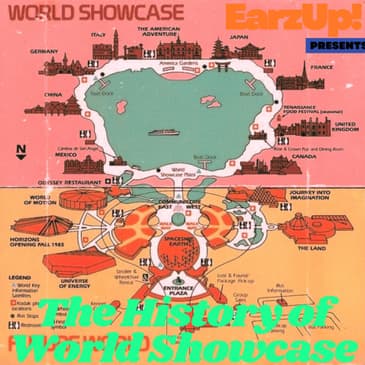
EPCOT Center, located in Walt Disney World, is a park with two halves that don't really make any sense together. On today's show, Erik takes us through one of those halves, the half with all the booze in it. We're talking about World Showcase, that wonderful section of the park resting on top of Spaceship Earth, like a North star of international brotherhood and comradery. And drinking.
Learn more about your ad choices. Visit megaphone.fm/adchoices
[00:00:02] [SPEAKER_02] It's time for the show that brings the magic right to your speakers. EarzUp! Hey, what's going on everybody? EarzUp Podcast. Late on a Friday night, man, I just came running in. We were at the family dance at Alice's school. Oh, wow. And it was celebrating the 20th year of her school, which is kind of weird.
[00:00:30] [SPEAKER_02] We're like, that school started after I graduated high school. So it's a little bit odd, man. But, you know, it was nice. Alice loves a little dance. And we get to go and get our eardrums blown out. But I'm like, come running in here. I'm like, here we go. I need to be here real fast because I need to just relax. I'm sweaty because it's hot in the thing. And my eardrums are blown. And that's it, man. But, you know, we're here now.
[00:00:59] [SPEAKER_02] And you're so excited to hear about Epcot. Yeah, nothing will lull me to sleep more than hearing about Epcot.
[00:01:07] [SPEAKER_01] Oh, wait. You wanted sleep? I can get more names of old men.
[00:01:11] [SPEAKER_02] Yes, please do. I need their inseams. It's funny because they have like out in front, you know, they have like these two. I wouldn't even call them food trucks. They're literally trailers. Like one is literally like a trailer that someone put like wood on the side. It has like a drop down back and like a cover over it. And then they're making these like, I don't know, fruit, tropical drinks. You know, they're just like sodas, but it's whatever.
[00:01:39] [SPEAKER_02] And then someone else has like a smaller trailer. They're both trailers. But anyway, it doesn't matter what they are. So Alice goes over and she's, I want this one. It's dragon fruit and passion fruit, like soda, basically. But like just a, I don't know, flavored drink. It's like a lemonade is what it is. But then they put other stuff in it. Dragon fruit doesn't really have a flavor. So I don't know what, I don't know what it's doing in here, but they, it's $9 for this thing. I felt like I was at Disneyland.
[00:02:10] [SPEAKER_02] All right. But they deliver it to you. I wish I had it. You ever get like, uh, uh, you go to like a Chinese restaurant, get a little Chinese takeaway or something. And you get a soup and it's in those, those like kind of tall, opaque jars or like a container. It was in that, my brother. So not exactly a drinking vessel. No, it was huge. And I mean, it had a lid and a big old, like a big old straw, like a boba sized straw. Alice. Yeah. Yeah.
[00:02:39] [SPEAKER_02] Thank you. Look at, look at the stupid, look at the stupid thing. It's mad. It's soup. It's, you put soup in here. Thank you.
[00:02:49] [SPEAKER_01] Well, the boba straw says otherwise.
[00:02:51] [SPEAKER_02] Yeah. It was wild, dude. I'm like, okay, cool, man. Whatever. That's all. That's my story. So, so thank you for, uh, for pushing a little bit later, Eric. I do appreciate it. Um, you know, that's how it goes, man, dude. Yeah. If you guys are watching on Twitch, uh, you know, you want to help us out and you don't want to like do a patron thing or whatever, which I totally get. Uh, if you have Amazon prime, you get a free, like a subscription that you can put anywhere on Twitch.
[00:03:18] [SPEAKER_02] So you can set up your, um, your Amazon account and that you, you can get directions anywhere and then you can just, uh, give us a free sub every month and we get a little bit of money out of that. So, whew. Okay. I'll keep up on those prime subs.
[00:03:33] [SPEAKER_01] Yeah. You gotta, I mean, it's free. You might as well.
[00:03:35] [SPEAKER_02] It's the thing get, let, get, let us take Bezos money. You know, it's the way to stick it to the man or something. I don't know.
[00:03:44] [SPEAKER_01] Maybe not completely stick it, but maybe not completely, but you know, anyway, let me calm
[00:03:50] [SPEAKER_02] down a little bit, Eric, what's going on with you, man. What are we talking about today?
[00:03:53] [SPEAKER_01] Oh, well, we've been talking about maybe getting some more Walt Disney world history and, and content into here. Yes. Because, uh, you know, when I showed up on, on the scene, I looked around and like all of the, the Disneyland has been covered.
[00:04:10] [SPEAKER_02] Yes. Well, and that was, that's one thing we talked about, I think at the top of the year, we're like, we're going to start doing more Disney world content. And it only took nine months for us to like, yeah, you're right. Um, but yeah, we do need it. We do need it because Disney world has its own, you know, flavor and, and, uh, you're the Disney world man. You know what I mean? I suppose so.
[00:04:31] [SPEAKER_01] Yeah.
[00:04:31] [SPEAKER_02] Yeah.
[00:04:32] [SPEAKER_01] So we're going to talk about one of my favorite places, Epcot, and we're going to do, basically this has turned into, I mean, it sounds like this is going to be a series. Yes. I think so. Yet another series. Yeah. It's gotta be, you know what I mean? Right. Yeah. Cause you don't want to hear me talk about the entirety of a world showcase in one episode
[00:04:55] [SPEAKER_02] sitting and we'll be back with our fifth break because I imagine there's a lot. That's the thing. Like I, I still feel like Disney world in my mind, in my heart. Um, I still feel like Disney world is like a, the new park, but you don't really realize that it's only maybe 20 years older, you know, and there's still a lot of history within that. I mean, as much as it takes to, to do a new ride, there was way more problems and way more things going on building Disney world.
[00:05:24] [SPEAKER_02] So I think the, the history is equally as fascinating, even though Walt didn't have anything to do with it necessarily, except the driving force, you know, behind doing it. Um, I, I still think, uh, maybe, maybe the history is on par with its interosity. If I can make up a word because it's how do you move forward without your rudder? That is Walt.
[00:05:49] [SPEAKER_02] How do you move forward and make a plan and do a thing without the, without the man who would say yes or no?
[00:05:57] [SPEAKER_01] Yeah. And that's it. Exactly. I mean, right from the start, there's all these little power struggles and here we're talking about Epcot center, which opened up more than a decade after. And they're starting planning on this within, within a few years of, of Walt Disney world itself opening, opening up. Yeah. And, uh, it, yeah, it, it, it's again, a lot of, a lot of similar names to, to imagineers
[00:06:24] [SPEAKER_01] that you recall from a lot of other stories about Disneyland and, and even animation and the studios. A lot of these people keep popping up like Harper Goff is still around, still designing things, but with such a big undertaking as, as a, this massive land, this massive chunk of central Florida that Disney bought.
[00:06:49] [SPEAKER_03] Yeah.
[00:06:50] [SPEAKER_01] There's a lot more to do. So it's not just one designer. It's not just a couple designers. It's a whole bunch of people. It's a whole lot of money coming in from all sorts of places. And what I wanted to do was just kind of lay down a little bit of a primer here on, on world showcase, which is really just half of Epcot. If, if you're, if you're not in the know about what Epcot is and, uh, you know, kind
[00:07:16] [SPEAKER_01] of give you a sense of, of where, how this part of the park developed, because it is very different from, from the other half, which was originally future world. And, and, uh, yeah, there, there's a, there's a lot to discuss both thematically and historically. And, uh, we'll start getting into that. And then for who knows how much going into the future, we'll all kind of, um, take some
[00:07:41] [SPEAKER_01] turns and, and do some deeper dives into each pavilion because each country in world showcase has its own unique story.
[00:07:49] [SPEAKER_02] Yeah. And I think that's a good place to start because as much as we talk about Epcot and as much as we talk about that part of Disney world, um, we don't really discuss what it is or how it was formed or whatever. So I think it's our favorite place to be. So, and I think it's a lot of listeners favorite place to be too. Epcot is, is everyone, everyone goes to Epcot. You got to go to Epcot, blah, blah, blah. It's kind of weird. It's its own funky thing.
[00:08:15] [SPEAKER_02] It's sort of like DCA if DC, if DCA was cool, it's just different. You know what I mean? It's like just its own different thing. So, but I love DCA. Don't get me wrong. Um, yeah. So I think it's a great place to start, uh, with the world showcase because I think it highlights the educational thematically thing of, uh, of Disneyland or, uh, yeah, that Walt had for, for, uh, you know, his whole, his whole, I'm rambling right now. My brain is still like on dance mode. It's a party in the USA.
[00:08:45] [SPEAKER_02] Anyway, go ahead. Okay. I love it. I love this choice. Yeah. I don't have anything else to say, man. I mean, I could, I could, I could talk. But well, you have been, and it's, I told you I could, I mean, you know what I mean? Of course.
[00:08:59] [SPEAKER_01] Of course. Well, uh, yeah. Like Jason said, there, there is a lot of history before leading into this, but we're going to skip over. I mean, Walt's not really going to factor into this story a whole lot at this point. And I'm going to skip over the whole city of tomorrow and all of that. We're just going to go to the point where the magic kingdom has been developed. The Imagineers are looking to build park number two and expand this, this Disney world from
[00:09:29] [SPEAKER_01] one vacation kingdom, uh, of water sport, weird water sports and a couple hotels and, and one theme park and just move it further down the monorail way and, uh, build something more. And this, this Epcot center idea had, there, there's a lot of sort of mythology around it and, oh, we wanted to build a permanent world's fair. And we wanted to build this exhibition of, of new technology.
[00:09:58] [SPEAKER_01] And we wanted to show culture and the history of the world and, and all of these warring factions. And they kind of, uh, according to the stories, they crammed it all together. And Marty Sklar came in and looked at it and said, that's it. Um, you know, he said, Bazinga, I got it. Right. Well, who knows how much of all that is true. What I can try to do is bring in as many resources as I can from actual.
[00:10:28] [SPEAKER_01] I mean, how much fact is there again? This is something that was happening in the seventies. A lot of the people who are involved are gone, but there are a lot of interviews with people. There are, there are accounts in major news sources. There are really dry, dusty plans in annual reports. Those tend to be less, uh, flowery in their speech than some of the books put out at the time.
[00:10:53] [SPEAKER_01] Uh, like one of my favorite favorites, Walt Disney's Epcot center, which has, it's this massive coffee table book from, from 1980 that has all these, this concept art in it and all of these really dense, densely worded descriptions of everything. And it's cool, but you can tell this is what the company decided even, even in 1980s. They're like, this is the image we want to present about this new park that's coming in a couple of years.
[00:11:21] [SPEAKER_02] You know, it is interesting to look back at the marketing trends of large companies like that, you know, cause I feel like that it sounds like that fits with my, with my interpretation of, uh, corporate marketing in the late seventies, early eighties, where it's like dense information. And then we're going to give it to you. And we just gave one, give it to you straight. This is what it is. You know what I mean?
[00:11:50] [SPEAKER_02] But now it would be like, well, the dream imagination wish, uh, would lift up everybody's spirits and tell the story that's in our hearts and in everybody's hearts.
[00:12:00] [SPEAKER_01] Yeah. Yeah. And maybe I hadn't really planned on this, so I would have gotten a quote here already, but let's see. Let me just pick something from the description of world showcase here. Yeah. Um, so this, this is this, this giant book here, uh, world showcase curving along the shores of the lagoon that connects to future world is a permanent community, community of nations whose pavilion stands side by side in exemplary amity.
[00:12:31] [SPEAKER_01] That's no wars happening here in Disney world.
[00:12:36] [SPEAKER_02] Yeah.
[00:12:37] [SPEAKER_01] Mexico, China, Germany, Italy, Japan, France, the United Kingdom and Canada are good neighbors to one another and to the American adventure. The host pavilion located at the center of the group.
[00:12:50] [SPEAKER_02] It's no one talks about dreams at all in this. We're all friends on the world stage. There's an American pavilion. I wonder if that's where they got the, uh, idea to DCA. We're like, well, look, if we can put an American pavilion in America, in a park in America, we can sure as hell put a California park in California.
[00:13:09] [SPEAKER_01] Well, let's start with that American pavilion. Okay. We'll go into much further detail here, but the reason I bring up America, well, I mean, you're the one who brought up America first, I suppose, but, uh, the, the way that you can picture it, you know, picture Epcot now. And if you haven't seen it, there's, there's this lagoon at the south end. And as you're walking through the park, you basically, uh, leave, leave all of the,
[00:13:38] [SPEAKER_01] you know, the future, futurey stuff at the front end of the park. And as you head into the back portion, there's this big lagoon and, uh, there's a path that goes all the way around it. And that's where all of these pavilions are. And each, each section was designed to host another, another country and, um, and its exhibits. And the, uh, the American adventure was supposed to be the first thing you passed through.
[00:14:07] [SPEAKER_01] So as far as the history is concerned, uh, the, a lot of the early ideas were to have these two big semi-circular, um, like really gigantic buildings that would go around this lagoon. So picture, just picture two big brutalist architecture, uh, monstrosities that house
[00:14:35] [SPEAKER_01] all of the countries. And right in the center at the front is the courtyard of nations featuring America. Uh, the, the idea being that everything, everything has kind of a little front piece that you can, they're basically giant strip malls, but everything was going to be the same. So no country would look more affluent, more impressive than another. Everything is uniform. And then you go inside and then you see something different.
[00:15:02] [SPEAKER_02] That is very American. It's just strip malls. We're just going to be really boring. They're really long. We're going to be really elongated. It'd be nice.
[00:15:11] [SPEAKER_01] Right. This is going through all of its, its iterations in the early seventies. Uh, people keep coming up with these big master plans and everything kind of gets kind of morphs over time as, as these sorts of things do. Yeah. At one point in 1975, uh, there were 27 nations that were being tossed around as ideas for, for world showcase, not necessarily all fitting in there, but countries that Disney was approaching.
[00:15:39] [SPEAKER_01] And the reason they're approaching countries isn't to like ask permission for Japan. Hey, do you want, would you mind if we make a, you know, an exhibit for you?
[00:15:49] [SPEAKER_03] Yeah.
[00:15:49] [SPEAKER_01] The, the idea is that Epcot is going to showcase, uh, culture history. They want to focus on the trade and tourism involved in each of these, these countries, their, their technology, you know, what they're contributing to the world, uh, live entertainment as part of that sort of cultural identity, uh, restaurants that highlight their, their local
[00:16:15] [SPEAKER_01] cuisine and, uh, even retail establishments that are furnished with items that come from each of these countries. And of course, Disney designed attractions. So people get that, you know, Disney theme park experience, but all of this is going to be extremely expensive. Sure. Sure. So seventies, they're already looking at millions of dollars for each pavilion.
[00:16:41] [SPEAKER_01] And the idea is let's go to these countries and they'll be so impressed with our idea that they will pay for their pavilions. That was the idea. So that's why Jack Lindquist, the marketing, the marketing executive in charge of all of this had been to 27 different countries and like pitching this to the leaders of these nations in some cases.
[00:17:08] [SPEAKER_01] And, uh, kind of striking out, uh, in 75, they were already thinking this park is going to open in 1979 and, uh, we'll start with 10 countries. How about we, we scale it back. We go with 10 countries and we'll expand over time, get up to 30. Now, Jason, how many countries do you think were, were super excited and we're ready to shell
[00:17:37] [SPEAKER_01] out some cash for the opening of Epcot center?
[00:17:42] [SPEAKER_02] I mean, I would say five. Okay. I would say five. That seems like a nice round number, uh, out of 27. I'd say, I think five. Okay. Yeah.
[00:17:54] [SPEAKER_01] All right. So you think, uh, you think five, uh, listeners, what do you think? Please, please tell your podcast device. Yeah. And we will wait to hear from everybody. Right. Oh, wow. That's a great response. Oh, thank you. Oh, that that's way off. Thanks for, for playing along. Uh, what ended up happening was a zero. Zero countries wanted to, wanted to pay in.
[00:18:21] [SPEAKER_01] Now they did approach, like I said, quite a few different countries. And in some cases the world changed during negotiations. Countries in the middle East drastically changed leadership during the seventies.
[00:18:34] [SPEAKER_02] Why? Yeah. Why? I wonder. That's so weird. I wonder what country helped that happen.
[00:18:39] [SPEAKER_01] Mm hmm. Well, we'll leave that alone for now. Yeah. But, but yeah, there, there were some, some more enthusiastic responses that ended up kind of disappearing as, as regimes changed. And ultimately the, the money that came into, into Epcot center was mostly Disney, but also quite a bit from corporations and the, and other, you know, and industry in these countries.
[00:19:05] [SPEAKER_01] So they were partially successful in, uh, in how all of this got put together.
[00:19:11] [SPEAKER_02] It, it, which is interesting because it, I would think that with the success of Disneyland, Disney world would kind of be a slam dunk. And so I would think if you're Canada or Japan or China, or, you know, I don't know, man, Kenya, I don't know, whatever. Right. You'd be like, oh yeah, that would be pretty sick to be a part of this because it would help boost tourism and, and, you know, whatever cultural awareness of what we're doing over here.
[00:19:38] [SPEAKER_02] And that's kind of, you would, you would think that you would, Lindquist would have gotten more out of that, I guess is what I'm saying.
[00:19:44] [SPEAKER_01] Yeah. And that was that it really wasn't looking back back. You're like, wow, the audacity as a corporation to go around and say, um, yeah, $2 million, please.
[00:19:56] [SPEAKER_02] And thank you for what I don't really know yet. We haven't, we have a rough idea. We'll let you know when the bill comes.
[00:20:02] [SPEAKER_01] Right. Well, what they were in their, their packet that we were kind of presenting was, uh, design and construction and, uh, whatever exhibits they wanted to put in bankrolling the ride or attraction that would get put in. Um, even though that would generally be designed by Disney because they're, they're good at that. And, uh, housing for employees from each nation, um, and for whomever else, you know, needs to be associated.
[00:20:32] [SPEAKER_01] But, uh, one of the early ideas was to have people from each of these countries, they're staffing each of their own pavilions and, uh, maintenance for at least 10 years. So then Disney provides the rest of the infrastructure, you know, transportation, shared facilities around, uh, around the park, everything else. So is, is that the price is $1 million a price or do you, do you know the price? It's not really published how much it, it is.
[00:21:02] [SPEAKER_01] There are some, some estimates for some of the companies that came in some later deals that were reported and aren't necessarily corroborated by a lot of, uh, I don't see a lot of evidence for it, but someone who did work for the company said that some later pavilions cost about $7 million. That's a lot of money. Yeah.
[00:21:25] [SPEAKER_02] Especially in the seventies, man.
[00:21:27] [SPEAKER_01] Right. And this is, you know, this is still not too much further. It's, you know, five additional years down the road where some of these other countries are coming in. So, uh, yeah, who, who really knows where it ended up? It's, uh, it still is quite a, quite a hefty chunk of change to throw out there, especially considering that an energy crisis enveloped the world. Well, yeah. In the middle of that decade, some of the, well, some of this was reported in the Washington post in 1981.
[00:21:54] [SPEAKER_01] None of the eight opening day pavilions was funded directly by its national government, but, uh, plenty of other corporate funding came in. Like I mentioned, except for the China pavilion. These are the countries that came in and their initial, their initial funding. Uh, we'll get into this in much more detail. I'm sure when we actually talk about each of the pavilions, cause there's, it gets kind of crazy with some of this stuff, but we're talking, we're talking about Mexico, China,
[00:22:23] [SPEAKER_01] Germany, Italy, America, uh, Japan, France, United Kingdom, and Canada. And the funding comes from all sorts of places. It comes from restaurants. It comes from department stores. It comes from industry, uh, like the America pavilion is Coca-Cola and American express.
[00:22:44] [SPEAKER_01] Initially, uh, Japan was largely paid for by, uh, Mitsukoshi department stores, a major Japanese, uh, department store chain. And in some cases, uh, restaurants like in Italy and in France, where the owners of the restaurant that started Fettuccine Alfredo basically paid for a restaurant in the Italy pavilion and four French chefs paid for a restaurant in France.
[00:23:14] [SPEAKER_01] So it's, it's kind of all over the place who they ended up getting. They did end up being partially successful in all of this.
[00:23:20] [SPEAKER_02] That's wild to me that, um, that the government's like, yeah, we shall pass. But then, you know, you get a little like, uh, walking down the street and you hear a Hey, over here, monsieur. And then you look down a dark alley and there's like four chefs in a trench coat going like, we want in, we want in on this right now. Like, I don't know that the, the, the pivot from, you know, federal funding to, you know, private sector is, is crazy. I don't know. It's like a bold ass move, man.
[00:23:49] [SPEAKER_02] And I, I would love to know how that went down. Like where, where that, where that idea came from, who was approached by whom. And, uh, cause I think that it's almost a clandestine, but it does, uh, it does kind of, I don't know, man, the ring of some sort of, uh, international thriller.
[00:24:09] [SPEAKER_01] Right. There's just a, there's a chef sitting in the background in, in the, while they're talking to the French president and he's like, Hey, Hey, like you said, meet me down this, down this street. But, uh, yeah, it, it, it, it changes drastically. And speaking of changing drastically is the layout of this, this area.
[00:24:30] [SPEAKER_01] Uh, this all happens in late, in the late seventies as reported by the 1977, uh, annual report that brings up master plan five, the thrilling named plan. So named because it was the fifth master plan. Amen. Uh, yes. So the fifth iteration of master plans shows future world roughly as it is today.
[00:25:00] [SPEAKER_01] And, uh, the, the world showcase roughly as it is today with each area outdoors with a lot, a lot to look at on the external, the external portion of the pavilion. And then based on what they actually chose to build, whether there's a show building or restaurant buildings, uh, all of that behind the main sort of, uh, eye candy in each pavilion.
[00:25:28] [SPEAKER_01] And that's all reported there. They're saying this really is going to be a community of nations. It announced that countries from around the world will stand side by side in friendship along the banks of a broad lagoon.
[00:25:40] [SPEAKER_02] Um, but I mean, they are, but it's still, it is very still the sterile and boring. We're standing by the lagoon. I don't know. It is. There's no, there's no creativity in it. You know, it's like just literally what they're doing.
[00:25:57] [SPEAKER_01] Oh yeah. Well, the creativity starts to come in as they start settling on which countries are going to be involved. Uh, sorry to some of the early front runners, Costa Rica, uh, Israel. There are multiple attempts to get Israel into world showcase. Oh man. Uh, Morocco eventually played along another, you know, a few years later, Poland, Saudi Arabia,
[00:26:23] [SPEAKER_01] South Korea, United Arab Emirates, Venezuela, Poland.
[00:26:28] [SPEAKER_02] I mean, no offense to Poland, but like I, when I, when I think of like international countries that, uh, you know, would belong in a world showcase, I don't know much about Poland's contribution to like the world, you know what I mean? To, to like, I don't know. I did. They wouldn't be on my list. Hmm.
[00:26:50] [SPEAKER_01] Well, Hey, they, they hit them up for cash anyway.
[00:26:54] [SPEAKER_03] Yeah.
[00:26:55] [SPEAKER_01] Um, at the time it was West Germany, plenty of others that may not have made it quite so far. As you're well aware there, there were, there have always been talks about a, uh, Greek pavilion.
[00:27:06] [SPEAKER_02] That's right. Where's Lee? Where's my buddy Lee? Let's go Greece and, uh, and Disney world. Let's go world showcase.
[00:27:11] [SPEAKER_01] We need a Greece pavilion around this time. Some of the numbers that were leaked, uh, got to as high as, uh, it might cost up to $30 million for each pavilion in total. That stinks. Oh, but yeah, that's, that's with all of that's with everything, you know, all of the contributions that they're looking for, not just what they were asking for each from each country. And, uh, yeah, that was, that was particularly optimistic.
[00:27:37] [SPEAKER_01] The park opened in 1982 with the list of countries that I mentioned a few minutes ago. And, uh, it was, it was a success. Uh, not everything was quite open at the beginning and there, um, there's plenty more to look at as we go. First up, uh, there was Morocco that was added in September of 1984. It was the first new country added after the main park. This.
[00:28:07] [SPEAKER_01] So some people, I noticed, thank you, Olivia for in the chat for saying one, this is our one country. Morocco actually paid for their own pavilion. Initially, they brought in their own designers. They brought in their own craftsmen. If you look at the mosaic work around this pavilion, it's incredible. Uh, again, we'll talk about it when we actually get to Morocco itself, but they finally fulfilled the dream and got there a couple of restaurants and, and have exhibits there and everything.
[00:28:36] [SPEAKER_01] They don't have an attraction, but it's still a pretty beautiful, uh, location in there. Next up was Norway in 1988. This, uh, was the last full pavilion to be put in the showcase. So it really only expanded a little bit. There's still plenty of space to, uh, to get involved with, uh, throughout. That's kind of the basics there. Uh, there are plenty of interesting things that happened along the way though, which,
[00:29:07] [SPEAKER_01] uh, who do you think was the first president to visit Epcot Jason?
[00:29:11] [SPEAKER_02] Oh God. See, now you're going to expose my lack of, uh, of historical knowledge. I would guess, uh, the first president, uh, um, uh, John, uh, Nixon.
[00:29:29] [SPEAKER_01] That's a good guess. Nixon loved Disney stuff. It was actually, uh, it was actually the Gipper himself. Reagan addressed students participating in the world showcase fellowship program. Oh yeah.
[00:29:42] [SPEAKER_02] Cause he was the pro. Okay. Yeah.
[00:29:44] [SPEAKER_01] The current president. He was there in 1983 and he gave a speech and there was a parade around the lagoon. And there you go. First president there. Hmm. Uh, let's see. So Morocco opened in 84, 88 was Norway.
[00:30:01] [SPEAKER_02] Maybe he should have tried selling a slot to a slot in the showcase to Iran instead of a guns. You know what I'm trying to say?
[00:30:09] [SPEAKER_01] Well, I got on singing them, man, all over it here. Uh, 1990 brought in the international gateway. Now that is something that I didn't even know existed. Those are those old computers, right? You could buy a computer online. No, that was the, uh, that was all in future world. And that was the, no, I was joking about the gateway computers, the gateway. Oh, I, oh, I didn't even get that reference. Yeah. That's the cows and everything.
[00:30:38] [SPEAKER_02] Yeah. Yeah. Yeah. Actually, Eric, let me interrupt you because my, my stupendous joke needs to soak in a little bit. Oh, okay. Let's take a quick break. Oh, okay. Okay. And we'll come right back learning more about the history of world showcase in Epcot Center in Walt Disney World in Orlando, Florida, on the East coast of a beautiful sunny America. Stay tuned. Everyone will be right back.
[00:31:06] [SPEAKER_02] Back to ears up where the opinions never stop ever.
[00:31:11] All right.
[00:31:12] [SPEAKER_02] Thanks for hanging on everybody. We're back over here, hanging out at Epcot and we're learning all about it. We're on tour. We're on the walk-in tour with Eric.
[00:31:21] [SPEAKER_01] Oh, yes. Just walking in circles and circles and circles. That's right. And then more circles.
[00:31:27] [SPEAKER_02] Concentric circles, maybe.
[00:31:28] [SPEAKER_01] We're not necessarily drinking our way around the world at this point. I should, we're kind of closing in on some of the pivotal moments that led to that time honored Disney tradition.
[00:31:42] [SPEAKER_02] You know what? Maybe we do that when, when we do like the histories of the pavilions, we, we, we have the drink from the country. I mean, that might be fun.
[00:31:51] [SPEAKER_01] Well, yeah, that, that, that's a pretty good idea. Yeah. Especially, I mean, one of the, like I mentioned, some brands paid for, paid a lot of sponsorship money early on. And in many of those, you know, I, I was going, I was kind of looking at this and thinking when I was putting it together, like, Hey, it's, it's not just for, for eating and drinking this half of the park, but a lot of the sponsors were like national brands.
[00:32:19] [SPEAKER_01] Like in Germany, there, there were a few, a few wineries. There were a few breweries.
[00:32:27] [SPEAKER_02] God, I, when we went, I was so disappointed in the beer selection in the Germany pavilion. I was like, Oh man, we're gonna, we're gonna light it. It's gonna be great. I'm like, I'm just like the height of my beer thing. I'm like, Oh, this is going to be awesome. And it was like a frigging grapefruit wheat beer and then a Radler. I'm like, what the ass is this dude? Come on.
[00:32:48] [SPEAKER_01] It's kind of gone up and down over time. Yeah. Especially, especially places like Germany. But yeah, even from the start that there were, there were breweries that were involved like bass in the United kingdom. And France was a few different wineries involved as well. So there, there was a fair amount of, of alcohol in this section of the park that helped, helped it come to pass. So we're, we're moving right along here.
[00:33:16] [SPEAKER_01] Jeremy's talked a lot about all of the different shows that, that happened through the years. So 1988, there was illuminations. That was after a few weird attempts, like, like laser phonic fantasy over the lacoon. But, but yeah, this, that was the first year of the original illuminations was 1988. That's the big spectacular that lasted for quite a few years in the middle of a world showcase.
[00:33:45] [SPEAKER_01] So 1990 was the international gateway. That's when a few hotels opened up behind Epcot and there was a separate entrance made to and from the park in between Canada and England. Well, no, but in between France and England, um, in the world showcase. And I didn't even know that existed for quite some time, but then in the mid nineties, uh,
[00:34:12] [SPEAKER_01] 1994, the flower and garden festival was the first festival to open up at Epcot in the world showcase center. Holidays around the world was later in 1994. And then in 1996, the storied food and wine festival, uh, opened for the first time in Epcot. Uh, it had opened up a few years before that in, um, hotel convention centers near Disney, but not necessarily part of it.
[00:34:40] [SPEAKER_01] And, uh, yeah, but the rest is history. It's still happening every year at festivals, take up most of the year at Epcot. And that's, it's kind of gotten that reputation, um, where now they have flower and garden, they have food and wine, they have the international arts festival, holiday festivals. It's, it's constant festivals and it really does change up the park and make it one of those places
[00:35:06] [SPEAKER_01] where you want to go because no matter when, when you're there during the year, there's probably going to be something interesting and new and different there. That from the last time you were in town.
[00:35:16] [SPEAKER_03] Yeah.
[00:35:17] [SPEAKER_01] 1999 was the home of the millennium celebration, uh, at Epcot. The world showcase had a massive parade. They, they brought in a 65,000 square foot village, millennium village that was kind of off to the side. It's still partially there as an event center, but they, they brought in a whole bunch of this space, allowed them to bring in a bunch of additional nations that never got permanent pavilions,
[00:35:44] [SPEAKER_01] but helped to flesh out the celebration that, that year. Then we finally got illuminations, reflections of earth in 1999. Jeremy, Jeremy wept that day, your old pal, uh, 20 years of, I mean, I, I'm not going to say this facetiously, a very good, um, nighttime spectacular.
[00:36:07] [SPEAKER_03] Yeah.
[00:36:07] [SPEAKER_01] That was very beloved. There are more changes to pavilions over time, including to Mexico, to Norway. There was a big change in Norway when they added in, um, a lot of frozen stuff in, uh, 2014. And, uh, and then finally there's a big expansion to France in 2021, uh, where they added in Remy's Ratatouille adventure
[00:36:35] [SPEAKER_01] and expanded the entire pavilion to a new street, um, off of the, the back of the pavilion. And, and that's, that's where the, the kind of bones of, of the entire world showcase, uh, changed over time.
[00:36:50] [SPEAKER_03] Mm-mm.
[00:36:51] [SPEAKER_01] And what's, what's interesting, I, I think about all of that is some of this is possible, not just because the Disney company is changing over all of these years. Uh, because of course it did, you know, different leadership involved, different priorities involved. It might not be, you know, once the festival thing came along, it's like, Hey, let's, let's focus more on regional cuisines and not focus as much on live entertainment.
[00:37:16] [SPEAKER_01] And, you know, we'll fill up the eat to the beat concerts with Christopher Cross. And right. But, uh, you know, as things have changed over time, it's not necessarily, you don't get that same sense of, well, Walt didn't want it to be this way because Walt wasn't really involved with the design of this park.
[00:37:33] [SPEAKER_01] And really no one person was because this park is so huge and undertaking and has so many different, uh, so many different ideas and designs behind it. Even master plan five kind of acknowledges that this isn't it, you know, just to bring up a name from early that I said earlier, it's not, it's not Harper Goff's, uh, half of the park. It's not, you know, Joe Rohde's half of the park.
[00:38:02] [SPEAKER_01] This is a whole bunch of people who came together and each pavilion had its own design aesthetic and construction crews, just like they had different sponsors and different ideas. That's why in some pavilions you get an attraction. In some cases you think you're going to get an attraction like in Germany where they even built a, they even built a show building back there for a boat ride in, in Germany that never happened.
[00:38:29] [SPEAKER_02] That's crazy. What is there? What is it now?
[00:38:32] [SPEAKER_01] Uh, it's storage. Okay, good. Yeah. I love that. Did you go to the beer garden restaurant when you were in Germany there?
[00:38:41] [SPEAKER_02] You know what? I don't think we did. I don't think we did. I, it was a, it was a blur. It was a, it was a haze of, uh, you know, jet lag, alcohol and humidity. Oh, of course. Can't really tell. Um, I don't think we did know because nothing seemed interesting. I guess I, I don't really think we were, to be honest with you, I don't think we were fully prepared for what that area was or what there was to do. You know what I mean?
[00:39:10] [SPEAKER_02] We figured out like, oh, cause we're just Disneyland people. We're going to go and then it's easy to figure out. And I don't think so, which is another reason why I think it's really good to start with this area of that whole park because I don't really know what's there. It's like you go, like we walked around and they have like a, like I said, like the booth, like a cart with the beer. I was like, this sucks, dude. Let's go somewhere else.
[00:39:29] [SPEAKER_01] Right. And that cart doesn't really, it only has a few taps on it. And there are a couple of carts in Germany, but if you go into the beer garden, they've got a whole lot more. They've got live entertainment every 15 minutes or so. It's a buffet with a ton of really good German food. But on your way in, you can see where the entrance to that boat ride would have been. Same with Japan. Japan was, was supposedly going to have a show for a while that ended up not happening, but was built in Tokyo.
[00:39:58] [SPEAKER_01] And was also rumored to have a, well, there were designs for a roller coaster. A lot of these places ended up not having as much fun stuff because that's where things start to get really expensive. When you've got to design a ride that fits into the theme of a land and with the budget constantly rise with costs, it's constantly rising and not getting that sponsorship money in the way that they had anticipated.
[00:40:25] [SPEAKER_01] Disney wasn't able to build the, the area out the way that they wanted to. But this was such a big push at, you know, realizing they're not going to meet the 1979 deadline. I mentioned at the top there, they pushed Card Walker, the CEO at the time announced fairly early in 19, you know, what basically saying we're not going to make it in 1979, but we're opening October 1st, 1982.
[00:40:55] [SPEAKER_01] So almost kind of like that, that Disneyland opening and the Magic Kingdom opening. We're going to set a date and we're going to, by God, we're going to meet it. Oh, Card Walker. Right. It was a race. Let's get everything together. Let's bring in all of the people that we can. They pulled in all of the cash that they could, they could muster and everybody was involved. Uh, so it's really interesting.
[00:41:24] [SPEAKER_01] And another reason why it's really good to look at each of these pavilions one, one by one. And this being the, the early days of, I guess, not the earliest days of the company, but still a much different time than it is, than it is now where we're overanalyzing every single aspect of everything that comes along.
[00:41:47] [SPEAKER_01] There's less to, to read about. You're not getting a little bit of, you're not getting tons of details on every single design element as it's being thought of and, and produced. But there is a lot of interest because this is the third Disney park ever. So you get a lot of big articles written and there, there are people pouring through these annual reports and interviewing big wigs at Disney.
[00:42:14] [SPEAKER_01] So you get a lot of really interesting stuff through the Washington post wrote many large articles that kind of corroborate a lot of the Disney story without mythologizing everything. So they're the ones bringing in, it could potentially cost $30 million per pavilion. They're the ones saying actually using the term master plan five outside of these annual reports. So boring junk.
[00:42:40] [SPEAKER_02] Yeah.
[00:42:41] [SPEAKER_01] But, but they're, they're the ones saying that, you know, Disney might not make it, you know, Disney's promising an awful lot, but Hey, they, they pulled off most of it as they usually do. They, there were things that opened a few years later within each pavilion. And yet, you know, even without the, uh, you know, the, the notable extra pavilions that opened up. Yeah. This is going to be fun. I'm, I'm really excited about this plan. And I, I know Terrence seemed to, to get in on it.
[00:43:09] [SPEAKER_01] So we'll have to, we'll have to like draw straws on who gets which pavilions.
[00:43:17] [SPEAKER_02] Oh, you mean you're not doing them all?
[00:43:19] [SPEAKER_01] Oh, I mean, I could, but you know how I've done with the nine old men. No, no, no, no, no.
[00:43:23] [SPEAKER_02] You're doing great. You're doing great. All right. Well, very good, Eric. That's awesome, man. I think it's a good intro for it. Well, thank you. You're welcome.
[00:43:36] [SPEAKER_00] March in the past, present and future with all the news that's fit to cover. It's the years of Disney news.
[00:43:45] [SPEAKER_02] Cause there is stuff to talk about. Whoa, there is. Yeah. Number one. Here's a little bit of Disney world news. A little hot hit. It's not, not a whole lot going on. Uh, expedition Everest at Mad, uh, animal kingdom. Excuse me. Disney's animal kingdom. Uh, will no longer offer a single rider line beginning September 21st.
[00:44:05] [SPEAKER_01] That is real soon.
[00:44:07] [SPEAKER_02] That's real soon. And it's a real shame. That ride is probably the best roller coaster that I have ever been on. I'm going to say. Whoa. Yeah. Okay. I didn't know anything about it going in. And the fact that you go up and the track breaks and you back out of it. Like it was the coolest. It was so cool. I, that was like one of the most impactful rides that I've been on in, in, in the parks and just like all the decoration that roadie did putting in there. It was just awesome.
[00:44:38] [SPEAKER_02] I had a fantastic experience so much that we, so much so that we got off and went right back on. Oh, we just circled the thing and went right back in the line. Cause it was super. Why not?
[00:44:46] [SPEAKER_01] Yeah. So it really is great.
[00:44:49] [SPEAKER_02] Yeah. Yeah. Uh, Disney says testing of a new loading process resulted in lower average standby wait times. So apparently the single rider line is just, it's not needed anymore. Which is nice.
[00:45:02] [SPEAKER_01] Interesting. Yeah. It is. It's a, I mean, it's a good single rider line. It usually moves pretty quickly. I have gotten stuck in it sometimes where there you've got like a cast member who doesn't feel like weaving you in, or you're just kind of unlucky. You know how we're like all the, all the groups kind of fall in perfectly into each car, but
[00:45:27] [SPEAKER_01] it's, you know, something like, uh, you know, it's, it's just, it's two seats in each row. So it's less likely that you're going to have an odd number there. You're going to have a lot of even numbers and like the regular cars fill up pretty easily. Unlike, um, you know, uh, cars ride where there are three seats in each row and a single rider is, is often necessary.
[00:45:54] [SPEAKER_01] And that one, that line moves quickly, but they do get a lot of people in that way. But on the flip side, you miss out on that amazing queue. There's so much to look at in the queue. It sets up so much story and I, it really does, especially if it's your first time, it really does set up a lot of interesting facets that for a roller coaster, you don't expect that actually make it kind of fun to get hyped up a little bit and, and think about all this.
[00:46:22] [SPEAKER_01] And then, yeah, when the track breaks and all that, you're, you're, you're surprised.
[00:46:26] [SPEAKER_02] It's you're surprised. Cause you're like, what is like legitimately what's going to happen? Cause you don't, there's not many rides that I can think of. I'm maybe rock and roller coaster did. I don't know that you go backwards. Does rock and go backwards? No, I thought it did.
[00:46:41] [SPEAKER_01] Nope. Um, just forward, just launches you forward.
[00:46:44] [SPEAKER_02] Uh, but there's not that many that do that. Right.
[00:46:47] [SPEAKER_01] If, if any, so yeah, guardians turns you backwards a few times.
[00:46:51] [SPEAKER_02] Yeah, but that's different, right?
[00:46:54] [SPEAKER_01] Well, yeah. Cause the cars spin.
[00:46:56] [SPEAKER_02] Yeah. Yeah. But like, it just, it's, it's not a, it's not a direction. Oh yeah. Spoiler alert. Sorry. It's not a direction that you consider going and you think about it.
[00:47:05] [SPEAKER_01] All of these things are years old.
[00:47:06] Yeah.
[00:47:08] [SPEAKER_02] Uh, by the way, uh, Luke Skywalker is kind of related to another famous Jedi. Just so you know. Oh yeah. So that, that was like really a refreshing thing. I think roller coasters should go backwards more often. What do you think of that? That's my hot take. Wow. Here's another hot take. Um, apparently Disney is like really leaning into, uh, content creators, which I, of course it's always, it was always going to happen, but I hate that.
[00:47:37] [SPEAKER_02] I hate that it's happening. So they're coming back around again. Like Dana Walden envisions partnerships between creators and Disney at creator and created LA kickoff event. Um, where it was at the El Capitan and some big creator was like, Hey, why don't we take all these stories? Um, here he says, um, he told the audience, I said, his name is, uh, you Shay, you Shay. I don't know. Y O U S H A E I. Sure. Okay.
[00:48:08] [SPEAKER_02] Good, good, good guess. Yeah. He told the audience, Hey, I have this crazy idea. What if we premiere videos from creators on the big screen? I'm talking about the same videos we usually watch on our phones and our laptops, but have recently gotten so damn good that they deserve to be played in a theater that deserve to be premiered on a red carpet that deserve to be celebrated with 350 of the most creative people in the world. Wow. Shut up, dude. That is insane.
[00:48:37] [SPEAKER_02] The 350 of the most creative people in the world, cause there's 350 people in the room and they're all creators and whatever. It just, I, I don't know, man. I I'm all for fluffing yourself up, but there's pandering to your audience. I can't stand it, dude. I can't stand that. It's so fake. Um, the Disney executive said yes, resulting in the creation of this two day event, which also includes keynote speakers and conversation. So it's like Twitch con, but for idiots, Dana Walden, president and chief creative officer
[00:49:04] [SPEAKER_02] of the Walt Disney company noted how special the theater is for Disney having hosted premieres of Lion King, Avengers, whatever. Uh, she says, what strikes me about this room is the instinct. So many of you have for your audience, you know, them intimately, you hear from them constantly and you adjust in real time based on what they want. And that is very different from the kind of content that we produce. Well, not, not real. I mean, I don't know.
[00:49:32] [SPEAKER_02] I think you, so she's saying she doesn't know her audience intimately and she doesn't hear from them and they, she doesn't make adjustments based on what he, she hears from
[00:49:44] [SPEAKER_01] them from us. Maybe not like the next day, but I, I should sincerely hope that they're listening about their content and what people think about it.
[00:49:55] [SPEAKER_02] She elaborated. It can take years for our films and series to reach their audiences. And for you, it could be seconds. And there's something that we can learn from that immediacy from treating the audience as a true collaborator. Let me stop you right here. The, as a member of the audience do not listen to us. The collective hive mind of audience members do not know what we like. There are too many people with too many opinions.
[00:50:20] [SPEAKER_02] We look to you to tell us what is to produce a thing and go, we like, do you like this? We liked doing this. Do you like it? And then we go, yes or no. Do not, do not collaborate with us. We don't want that. We don't want the first fan created film. We don't want it. No. No.
[00:50:41] [SPEAKER_01] Then we're just getting the loudest or the, the, the best funded. Yeah.
[00:50:47] [SPEAKER_02] I don't know. Um, she goes on. My hope for these two days is that we'll exchange ideas and learn from each other. That some of what makes your storytelling so special rubs off on us. And that some of what we've learned about telling stories over many decades will be useful to you. Walden concluded by expressing her hope that created in LA would herald the beginning of incredible relationships. Maybe we can tell some stories together. The evening concludes. God damn it. I hate what I'm about to say.
[00:51:17] [SPEAKER_01] It's still going.
[00:51:17] [SPEAKER_02] I hate what I'm about to say. The event concluded with you, with you Shay introducing the golden state award. The award recognizes strong filmmakers or subscriber count. Oh. Ah. Ah. The first award went to Lucas and Curtis Nicotra who go by the name sticks. Their film, the techno blade movie premiered alongside Zach King's parody of star Wars.
[00:51:47] [SPEAKER_02] Cardboard strikes back. King received the second golden state award. None of that sounds awesome. None of that sounds awesome to me. Um, I don't, I, I dislike this like thing of, we need to focus on content, uh, subscribers. We need to, you know, the, the only value you have is based on your, your subscriber count.
[00:52:14] [SPEAKER_02] As if 40% of them aren't bots and 20% of them aren't even active anymore. And, uh, they're not, you don't have multiple people in subscribing to the same kind. Like it's not, I don't know. It's, it's, it's, it's a meaningless number to a certain extent. I mean, I understand there's a reach to it and whatever, but like, it's not, you're getting an award for subscriber count.
[00:52:38] [SPEAKER_01] How low have we sunk to come on, especially considering that they're finally getting a handle on how much streaming is worth. How many people are actually looking at and engaging with content that they put out in a more traditional fashion. You know, we had all those early years where Netflix is like, we've got 2 billion people that watched this. Yeah. Wait, how? Right. You're like, I don't know.
[00:53:07] [SPEAKER_01] I don't know. The tech guy said it was 2 billion.
[00:53:09] [SPEAKER_02] Well, now it's, now it's minutes stream. They've, they've condensed that. They've reduced that. They've changed it, which I think they should. I mean, tell me the minutes. That's fine. Because you know, you, you, you, yeah. Like you said, 2 billion people. What does that mean? How was that even? Like, did they watch the whole thing? You know, do they watch five minutes of it and then dip because it sucked, but they still clicked on red one and went, oh no, I was looking for burn notice. Yes. Yeah. And then that's it.
[00:53:37] [SPEAKER_02] They, they registered the first 30 seconds and then you're, that's a, that's a count. That doesn't make any sense. But minutes stream to me makes a lot of sense, you know, and then you can pile it up and go, okay, well, there's clearly a demand for that. Tell you what? I just watched one of the worst movies I've seen. Oh. One of, maybe I'm, maybe it's a little hyperbolic, but Disclosure Day by the great.
[00:54:01] [SPEAKER_01] Oh, the Spielberg? Yes. I have heard no good things about it. It is awful.
[00:54:11] [SPEAKER_02] I tell you, it is, it's like three movies in one that never match up. And then eventually the plot kind of coalesces into one direction and it doesn't make any sense. It doesn't make the movie better. It makes it worse. The plot sucks. The acting is not good. I'll tell you what it did do.
[00:54:37] [SPEAKER_02] It, it made me register for a Rotten Tomatoes account because I looked at Rotten, Rotten Tomatoes score and it was like 79% or whatever. I'm like, there's no way that this movie is that good based on it. So here's, here was my, here was my review. Okay. If I can, I won't spoil it. I mean, it's not even, it's Disclosure Day.
[00:55:01] [SPEAKER_02] The plot is the existence of aliens is disclosed to people and, and, and, and that happens. And that's like, that's it. Like that's what happened. And then the, the road to get there is so forgetful and so meaningless without any, literally without any emotion or chemistry. It's just a forgettable movie. It's a forgettable movie. Here's my, here's my, it's not about the fallout. It's about the lead up.
[00:55:30] [SPEAKER_02] It's about how it happened. Yes. It's about the journey to doing it. Yeah. That's all. Yeah. I learned more about how a news station selects feeds from different satellites than I did about, uh, whatever. Anyway, here's, here's my review. A film pulled right out of the late 1990s. Disclosure Day couldn't have made less of a point if it tried. Packed with stiff and disjointed dialogue, camera movements and transitions that were needless
[00:55:58] [SPEAKER_02] and distracting, and a plot that seemed to be slightly more interesting than the overuse of the digital lens flare. I had to distract myself from how boring this movie was by trying to see if I could notice Emily Blunt's top lip moving. Spoiler, I could not. One and a half stars. It has a 69% audience rating and a 79% Rotten Tomatoes score. Hmm.
[00:56:21] [SPEAKER_02] It's a boring movie full of lens flares and Botox and, and it severely lacks like just chemistry and, and any sort of like feeling. And the dialogue is just weird. I don't know. It's just, it's like, there's one point she's like, they can't see us. They can't see us. And then the guy goes, oh, it's okay. They can't see us. Let's go. And then everyone listens to him. It's like, she just said that.
[00:56:50] [SPEAKER_02] She spent literally two minutes explaining how nobody could see you. And then you said it. And then everyone's like, oh yeah. Okay. I just, I don't know. I just, it needed an editor. It needed an editor. And I don't, anyway, whatever.
[00:57:01] [SPEAKER_01] Is it, is it the Spielberg spell or everybody's like, well, it's gotta be good.
[00:57:06] [SPEAKER_02] Right? I kind of think so. I also realized like Steven Spielberg loves like a, like a low camera angle on a car chase that moves up or down. He loves that. Like that's very Spielberg to me. I mean, it was, it wasn't even shot particularly well. It, the camera movements were weird and kind of pushed in odd at odd times and focus on the weird stuff. And I don't know. I don't know why. I mean, the audience score is 69%. That's not, I mean, nice.
[00:57:36] [SPEAKER_02] First of all, but also it's not very good. The critics score. I don't know what that is. I don't really pay attention to the critics score because you never know who's getting paid. I don't know, man. That's fair. Yeah. Speaking of, speaking of, you know, the, the collective hive mind, uh, you know, influencing what comes out of Hollywood. Oh, brother. I mean, I wanted to turn it off several times, but I didn't because I knew I had to push through and persevere so I could write a review and feel good about it. And I did. I feel, I felt good about it.
[00:58:06] [SPEAKER_02] Okay.
[00:58:06] [SPEAKER_01] Well, you've, you've made your, your voice known in a way that you never get a chance to do.
[00:58:12] [SPEAKER_02] You don't, I don't have a platform at all. No one listens to me at all. Uh, Disney hires its first CTO, which is what chairman of technology technology. This is bonkers. Yeah. Your first CTO. Karen deep Anand, former CEO of AI chat, but chat bot startup. Uh, Disney chief Josh DiMaro in a move that shows he's trying to position the mouse house. That's another thing I can't stand.
[00:58:41] [SPEAKER_02] The house of mouse, the mouse house. Just frigging say Disney. Just frigging say it. Say the word. It's fine. Uh, as a, as a tech forward entertainment company has tapped veteran technology executive Karen deep Anand and it's as its first chief technology officer. Most recently Anand was CEO of character.ai, a generative AI. Chatbot company. About a year ago, Disney accused character.ai of quote blatantly infringing its copyrights
[00:59:10] [SPEAKER_02] and sent the tech startup a cease and desist letter demanding it remove Disney characters from its platform, which is weird that he's now employed by Disney. Right. Uh, no hard feelings. Apparently Disney announced that Anand will join the company as senior executive vice president and CTO, a newly created position effective October 2nd. He will report directly to DiMaro who took over as a CEO.
[00:59:35] [SPEAKER_02] Of course, in addition to Anand's appointment, a number of character.ai's technical team are expected to join Disney. Prior to character.ai, Anand served president and chief product officer of financial technology company Brex. He also held several, several leadership roles at Meta's Facebook, most recently as VP of ads and business products. Earlier in his career, Anand had senior product and engineering leadership roles at Microsoft,
[01:00:02] [SPEAKER_02] where he worked for 15 years and was part of the team that built the Azure cloud computing platform. Okay. Um, let's see. What did DiMaro say? He said, uh, current deep brings a rare mix of experience across infrastructure, consumer technology and AI, and will be a vital addition to Disney senior leadership team. As we further our three priorities, great storytelling as our North star technology in service of creativity and operating as one Disney.
[01:00:32] [SPEAKER_02] Wow. Wow. Yeah. Apparently he has sharp instincts for what fans actually want. There is nobody who wants AI. If you're going to be listening to people and listening to the fans, we don't want AI involved in this creative decision. We don't want it. Nobody wants it. And I can say that nobody wants it. Nobody wants, nobody wants to hear, well, this, this story was created by AI. I got the idea from AI. And then I wrote the script with the help of Claude.
[01:01:01] [SPEAKER_02] But you know, I, the AI, I don't know, man. Um, he will oversee enterprise technology, infrastructure, data, and AI platforms, product, and engineering. He will further modernize how the company builds and delivers technology company wide. Um, which is good because their apps and stuff kind of suck. Their website sucks. Uh, everything, all the technology Disney has kind of isn't very good.
[01:01:30] [SPEAKER_02] It hasn't been very good. You know what I mean?
[01:01:33] [SPEAKER_01] Yeah. As Olivia, very vocal tonight, Olivia. Thank you. In the chat here. Um, she'll take AI in the Disneyland app. Yeah. This is what I thought was going to happen with the CTO is let's beef up. I guess it's old technology. Now all anybody wants is, is AI. AI, obviously. That's what the article says.
[01:01:53] [SPEAKER_02] It's AI. Olivia wants AI apparently at Disneyland app. Yeah. I don't like it. I hate it. You know that, that's my stance. I, um, so people were concerned on the subreddit about, um, about, uh, the AI thing. And so like reading the subreddit, people don't want it. They're like, we don't want, like hopefully the app will be better and the website will be better. And that's good objectively, but like, we don't want AI in our, like in our stuff, man.
[01:02:23] [SPEAKER_02] There's no room for it.
[01:02:24] [SPEAKER_01] Creative decisions. Yeah.
[01:02:26] [SPEAKER_02] And that's what they're good. That's what Josh wants to do is use AI in the, in their creative platform as a tool. Uh, Taryn, you know, it's taking her, her, her class or paralegal class. She has, there's an opportunity to do extra credit because of course she's a SWAT. So she's going to do it. And it's these lunch and learns where I think they're like live, you know, chats or whatever with a bunch of people at lunch.
[01:02:52] [SPEAKER_02] And, um, she was doing one today and I happened to walk in and it was about, uh, how to use AI in the legal world. And they were talking about it. And I like listened in a couple of times and I swear to God I had to leave because I was so heated. I got, I was on fire. I'm like almost yelling at her. And she was like, I'm just, they're saying, and I'm just here. I'm like, you don't understand the fact that they're saying that. And I forget exactly what was going on, but this one lady is like, you, everyone should use it.
[01:03:22] [SPEAKER_02] You have to at least try it because what else, what, what's the worst that can happen? I'm like, people are literally dying over it. We're running out of water. We don't want it. The pushback on AI data centers is huge. It's in its, it's partisan too, which is great. Or bipartisan, whatever the good one is across the board. There you go. Yeah. It's just, it's, you know what I mean? Like we don't, we don't, we don't need it. And, uh, so anyway, I left and later on tonight turns like, dude, it's a good thing you left
[01:03:50] [SPEAKER_02] because this one lady compared using AI. Oh, that was the thing. And this lady was like, oh, you know, at one point I, I would have considered a spell check on my computer as AI. And I'm like, you're the dumbest person I've ever heard. That is the stupidest technology take I've ever heard my entire life.
[01:04:09] [SPEAKER_01] I did have somebody say reference spell check earlier today, not as AI, but say that as she literally said, you know, I used to be really good at spelling. I actually won the spelling bee in grade school. But, um, as soon as, as soon as spell check came along, I kind of lost it. Like, I don't know if spell check is what did it, but it could be your age, you know,
[01:04:30] [SPEAKER_02] your, your, your, your neuronic neurone elasticity.
[01:04:35] [SPEAKER_01] Yeah. This is one of the nurses I work with. Like, like, okay, I'm sure you spell just fine.
[01:04:41] Yeah.
[01:04:42] [SPEAKER_02] Right. I've always been bad at spelling. Uh, and I'm fine with it. Like spell check is a thing. I don't know how else I would be better at spelling unless someone sat down and was said, Hey, that is a wrong spelled word. That's an incorrect spelled word. Otherwise, how are you going to know? But like, you can still learn. Oh, I keep spelling, uh, receive incorrectly. I eventually I'll figure it out. Right. But it spell check is not an AI program.
[01:05:08] [SPEAKER_02] It's not a, it's, it's, it's, it's a dictionary you can literally add to on your computer. Like it's not, it shouldn't, it's a pro it's a program, but it has nothing to do with AI or, or retraining you or, or preventing you from learning anything. It's an asinine thing to say. But, uh, Taryn's like, yeah, this other lady chimed in and she goes, yeah, you know, uh, people were afraid of, uh, uh, remote controls for TV too. And I walked away from Taryn. And I was like, I can't even, I can't even let you finish this sentence because that is
[01:05:38] [SPEAKER_02] the, that is the second dumbest thing I've heard today. That is crazy. That's crazy to me to be like, oh, well it's the remote. It's no, your remote's not going to take your job. And then Taryn wrote in the chat, she's like, well, are we concerned about like, if we're trying to use AI in the law, in the legal world as paralegals, isn't that going to like limit the jobs that we have and whatever. And someone's like, oh, it'll just free you up to do more stuff. It's like, but like what? To get a second job?
[01:06:07] [SPEAKER_02] Because I don't, it just, it doesn't, whatever. Anyway, I'll stop because I talked too much about AI, but that made me mad. Yeah. Anyway, whatever. It was, I was super frustrated. And, and that's kind of the, the, the feeling that I got in the, in the Disney subreddit when they were reacting to this story where it's like, what, what are we going to, we're focusing on AI. That's what tomorrow wants. But I don't know. It's, it's going to water down all of our stories and we're all going to be, so it's just all the same.
[01:06:34] [SPEAKER_02] Like the, the people who had the frigging booth with the, the soup container drinks at Alice's dance. It's, it was, it's a, it's an AI label with two giant AI menus. And I'm like, oh my, it's like, hurts my eyes to look at it. Cause I just see it. I'm like, you can't, you just get Canva and just do what you're still, just learn how to do it yourself. Like this lady on this, in the, in her meeting was like, well, I use it for Excel and like I use it to like summarize this document and it's just fantastic. I could have, now I can do other things.
[01:07:04] [SPEAKER_02] I'm like, just learn how to summarize a document. If I, if I need a law firm and I learned that the paralegal who drew this up used AI, I will fire you in a second because there are so many cases that have been dropped because AI just makes stuff up. They just hallucinate case numbers. They hallucinate cases. It's yeah.
[01:07:25] [SPEAKER_01] Not everything is published in a neat and easy to, to read and well-organized space online where AI lives. I said I was done. I'm done.
[01:07:36] [SPEAKER_02] Okay. I got to shut up. I'm sorry. Yeah. Let's yeah. There we go. For those of you listening live, um, I'm going to be doing Buena Vista boys Sunday at 10 o'clock in the morning, right here on Twitch. We're going to be doing the apple dumpling game, which in and of itself is a fractured movie. No lens flares. Um, but that's a weird ass movie, dude. That's a weird movie. It's, it's the, the whole thing with Tim Conway and Don knots that should, that could
[01:08:06] [SPEAKER_02] be their own movie. It's like they just took two shorts and wove them together and like, that's it. And then they met at the end. They're like, ah, friends. So anyway, thanks everybody for tuning in. I appreciate Eric. Great job on the history of the, uh, world showcase. And we'll get into more detail about that later on. And, uh, looking forward to that.
[01:08:26] [SPEAKER_01] All right. Sounds like a blast in the future. There you go.
[01:08:30] [SPEAKER_02] All right, everyone. Thanks a lot for tuning in. I do appreciate it. And until next time, we'll see you in the parks.